Last updated October 15, 2026
How to Hire a ADU Contractor in San Diego: A Step-by-Step Guide
The contractor who quotes you $180,000 over the phone and the one who hands you a $220,000 written scope may be selling the same project. Or one of them is quietly leaving out $40,000 in site work, permits, and finishes that the other already counted. You won’t know until you read the paper. This guide walks you through exactly how to separate the two in San Diego, where ADU permitting rules, coastal terrain, and a crowded contractor market make written commitments the only currency that matters.
Quick Answer
To hire an ADU contractor in San Diego, start by verifying the contractor’s CSLB license, bond, and workers’ comp status, then require five written documents before signing anything: a written scope of work, an itemized bid, a permit-pull plan, a draw schedule tied to completed work, and written warranty terms. Interview for San Diego-specific ADU permit experience, reject vague bid language like “allowances” and “TBD,” and never hand over a deposit until every commitment is in writing.
Table of Contents
- Step 1: Verify the CSLB License, Bond, and Workers’ Comp
- Step 2: Require the Five Documents Before You Sign
- Step 3: Read the Bid for Red-Flag Language
- Step 4: Structure a Payment Draw Schedule That Protects You
- Step 5: Ask Interview Questions That Reveal San Diego ADU Experience
- Step 6: Compare Bids Line by Line, Not Bottom Line to Bottom Line
- Common Mistakes to Avoid
- When to Call a Professional
- Frequently Asked Questions
- The Bottom Line
Step 1: Verify the CSLB License, Bond, and Workers’ Comp
Before you discuss square footage, finishes, or timelines, you need to confirm three things about any contractor you’re considering for an ADU in San Diego. The Contractors State License Board (CSLB) maintains the public record, and checking takes under five minutes.
First, pull the license at the CSLB website and confirm the classification. ADUs and garage conversions fall under General Building (Class B) or a specialty classification like Residential Remodeling. The license must be active. A suspended license means the contractor cannot legally pull permits or collect payment in California, and a homeowner who pays an unlicensed operator on a project over $500 has almost no legal recourse.
Second, verify the bond. California requires a $25,000 contractor license bond, which exists to compensate homeowners if the contractor violates contracting law. A bond is not insurance for poor workmanship, but it signals the contractor met the state’s baseline financial responsibility test. If the bond is cancelled, the license is suspended automatically.
Third, confirm workers’ compensation coverage. If the contractor sends uninsured workers onto your property and someone gets hurt, the claim can fall on your homeowner’s insurance. In San Diego, where ADU builds involve significant roof, electrical, and foundation work, this is not a theoretical risk. Ask for a certificate of insurance and call the carrier to confirm the policy is active.
In our experience, about half the bids homeowners show us from other contractors are missing at least one of these three. It’s the fastest filter in the entire hiring process.
Step 2: Require the Five Documents Before You Sign
Every legitimate ADU contractor in San Diego should hand you five documents before asking for a signature. If any one of them is missing, walk away.
- Written scope of work. A sentence-level description of what is included: foundation type, framing, roofing, windows, doors, electrical service size, plumbing fixtures, insulation, drywall, paint, flooring, and site work. If the scope says “per plan” and the plans aren’t attached, it’s not a scope.
- Itemized bid. Line items with dollar amounts for each major phase: demolition, foundation, framing, rough plumbing, rough electrical, drywall, finishes, site work, and contingency. A single lump-sum number tells you nothing about what the contractor actually priced.
- Permit-pull plan. A written statement of who pulls the permit, who pays the permit fees, who schedules inspections, and who is responsible for corrections. In San Diego, permit fees for an ADU typically run from a few thousand dollars up to ten thousand or more depending on the project, and they should be a line item, not a surprise.
- Draw schedule. Payment milestones tied to completed, inspected work, never to calendar dates. More on this below.
- Written warranty terms. A document that names what is covered, for how long, and what happens if the work fails during the warranty period. If the warranty is verbal, it doesn’t exist.
We follow a similar approach on every project. The Kingswell Guarantee means a written price before work begins, a defined arrival window, a clean job site, and a written guarantee on every job, with a free return visit if the work fails within the 365-day period. That guarantee is a piece of paper, not a handshake. That’s the standard any homeowner should demand from any contractor.
Step 3: Read the Bid for Red-Flag Language
Change orders are how a low verbal quote becomes a higher final bill. The most common red flags appear in the bid language itself. Learn to spot them.
- “Allowance” line items. An allowance is a placeholder number the contractor may legally adjust once actual selections are made. Eight thousand dollars for finishes sounds fine until the final tile comes in at fourteen and the difference gets added to the invoice. Every allowance should have a documented basis, or better, be replaced with an actual selection before you sign.
- “TBD” or “per plan” on scope lines. If the scope references plans that don’t exist yet, the contractor hasn’t priced the project. You’re agreeing to an unknown number.
- “Owner to provide” on standard materials. Some exclusions are normal: appliances, specific lighting fixtures. But if doors, windows, or fixtures are marked “owner to provide,” the bid is not complete, and the gap becomes a change order.
- No contingency line. Real bids include a contingency of five to ten percent for existing-conditions surprises. A bid without one may be a sign the contractor will inflate every change order to cover what a contingency would have absorbed.
- “Any and all city requirements.” This phrase shifts the cost of unknown San Diego permit or planning requirements onto you. A contractor with real ADU experience in San Diego knows what the city requires and prices it.
The point is not to make bids adversarial. It’s to make them comparable. A written itemized bid is the only format where two numbers can be placed side by side and actually understood.
Step 4: Structure a Payment Draw Schedule That Protects You
The standard residential payment structure in San Diego starts with a deposit, then progresses through draws as phases complete. The problem is that many draw schedules are tied to dates, not to work. A schedule that says “25% at week four” pays the contractor for time, regardless of what is actually on the ground.
The draw schedule should be structured so your money always lags the completed work, never leads it. A reasonable structure for an ADU in San Diego:
- Deposit: 10% or the legal maximum. California law caps the down payment for home improvement contracts at 10% of the contract price or $1,000, whichever is less. Never pay more before work begins.
- Foundation complete and inspected: 15-20%. You pay after the San Diego building inspector signs off on the foundation.
- Framing and rough mechanicals complete: 25%. Walls up, roof on, rough plumbing and electrical inspected.
- Drywall and finishes installed: 20%. The space starts looking like a living space.
- Final inspection passed: 15%. The city signs off, certificate of occupancy in hand.
- Punch list complete: Final 5-10%. You hold the last draw until every listed item is corrected and the job site is clean.
Never allow the cumulative total paid to exceed the percentage of completed work. If the contractor is at 30% complete and you’ve paid 50%, you’ve lost your leverage and your protection.
Step 5: Ask Interview Questions That Reveal San Diego ADU Experience
Most contractors in San Diego can frame a wall. Fewer have pulled ADU permits through the specific process that San Diego and the County use, including the city’s ADU Bonus Program, the county’s pre-approved plan program, and the evolving state mandates around setbacks and parking. The right questions separate the two.
Ask these in the first or second conversation. Watch for smooth, specific answers versus vague hand-waving.
- “How many San Diego ADU permits have you pulled in the last three years?” A contractor who has done this work can cite the projects and the neighborhoods. Listen for the names: Clairemont, North Park, Chula Vista, Encinitas, El Cajon. The specifics matter.
- “What San Diego plan check corrections do you typically see on ADUs?” The answer reveals whether the contractor has sat in the city’s plan check queue or is guessing. Real answers mention things like the city’s specific energy calculation requirements or the county’s fire sprinkler rules for certain zones.
- “How do you handle a slope on a San Diego lot?” Much of eastern San Diego County and the coastal hills involve significant grade. A contractor with real local experience explains the foundation and drainage implications. One learning on your project will charge you change orders for it.
- “Which prefab manufacturers have you worked with?” Some San Diego homeowners choose prefab ADUs from builders like Cover, Dvele, Mighty Buildings, or Boxabl to compress the timeline. A contractor experienced with those systems can explain the site work, utility connections, and foundation requirements honestly. One seeing a prefab install for the first time will bill you for the learning curve.
- “What is your change order process in writing?” The answer should describe a written change order document, a price, and a signature before any extra work starts. If the answer is “we just talk it through,” that’s a red flag.
Step 6: Compare Bids Line by Line, Not Bottom Line to Bottom Line
The most expensive word in San Diego ADU construction is “cheaper.” A lower bid is not a better bid. It may simply be a less complete bid. The only way to compare is line by line, and that is why the itemized bid requirement from Step 2 matters so much.
Lay the two bids side by side. Ask the following of each line:
- Does the foundation line include excavation, rebar, concrete, and inspection fees, or just the slab?
- Does the electrical line include a new service panel, or just the wiring inside the ADU? An ADU often requires a panel upgrade or subpanel install, and that is a five-figure item if left out.
- Does the plumbing line include connecting to the sewer lateral, or just the fixtures inside? In San Diego, lateral work on an older property can cost thousands and is often “discovered” mid-project.
- Does the roofing line include underlayment, flashing, and gutters, or just the shingles or metal panels?
- Is site preparation, drainage, and retaining wall work anywhere in the scope, or will that become a change order after the first excavation?
Two bids with a $40,000 spread usually differ somewhere in these lines. The more expensive bid is often the one that actually priced the real project. The cheaper one will recover the difference through change orders, which a homeowner cannot avoid once the project is underway and the old garage has been demolished. Also note that Lodgewick ADU San Diego works with several prestigious prefab builders, which changes the cost conversation entirely. We know what’s in the base factory price and what site work San Diego specifically demands.
Common Mistakes to Avoid
- Paying more than the 10% legal deposit. California caps the down payment on home improvement contracts at 10% or $1,000, whichever is less. Any contractor asking for 30% or 50% up front is already violating state law. Walk.
- Signing a bid without an itemized scope. A one-page contract with a lump-sum number and a sentence of description is not a contract. It’s an invitation to a dispute.
- Letting the contractor pull permits without naming you as the owner. The permit should name the property owner, not just the contractor. Otherwise the contractor controls the permit, and you may not be able to get inspections scheduled if the relationship sours.
- Accepting a verbal warranty. If the warranty terms aren’t in the contract, there is no warranty. The conversation about what happens “if something goes wrong” is the one that matters most, and it’s the one most homeowners skip.
- Ignoring the “allowance” lines and signing anyway. Allowances are blank checks in the contractor’s pocket. Replace them with actual selections or documented allowances with a defined basis before you sign.
- Skipping the license and insurance verification. Five minutes on the CSLB site prevents a year of problems. An unlicensed quote in San Diego is not a bargain, it’s an uninsured liability on your property.
- Choosing the cheapest bid because it was the cheapest. In our experience across San Diego, the cheapest ADU bid is usually the least complete. The final cost ends up the same or higher, but the process is far more stressful.
When to Call a Professional
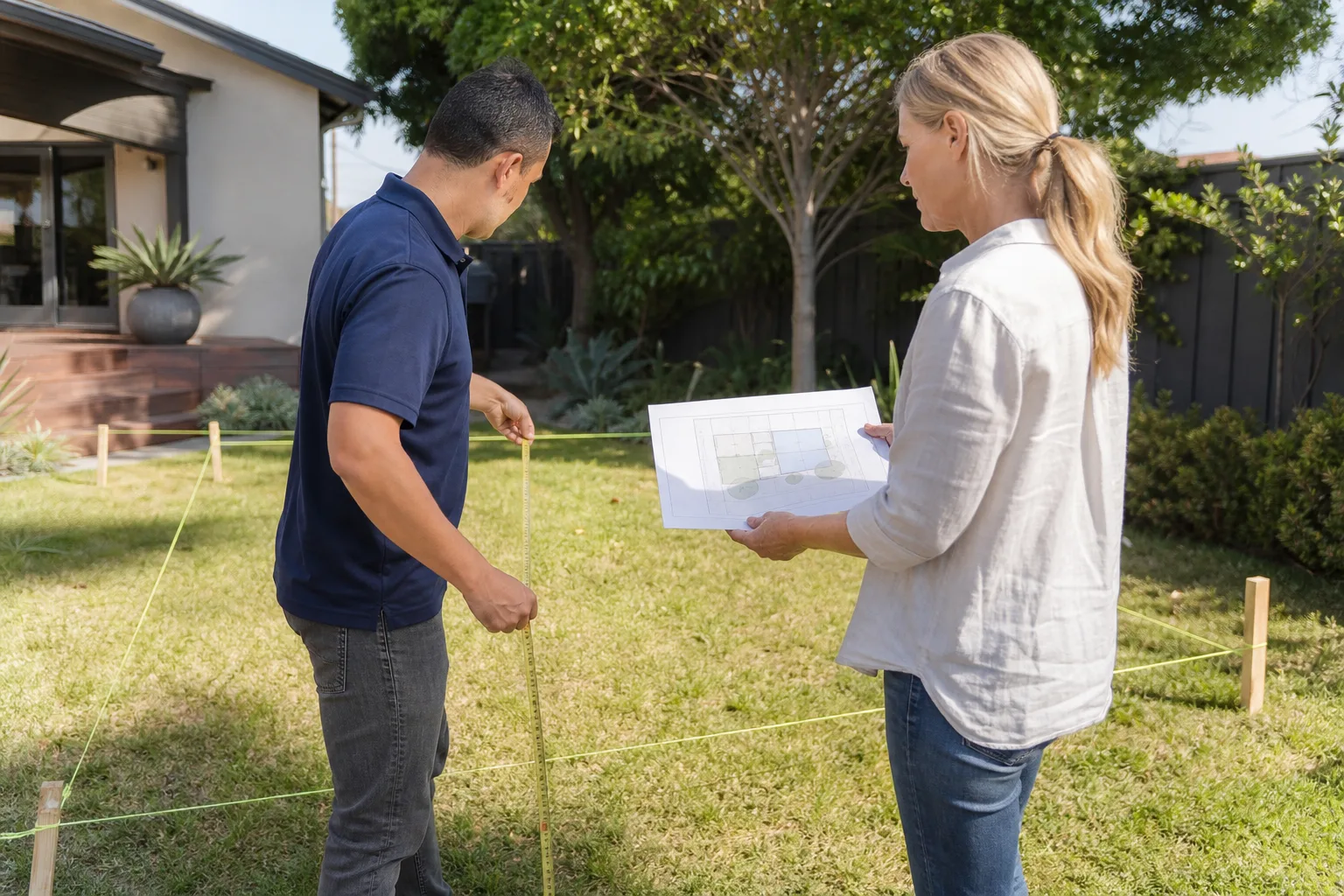
If you are early in the process and want straight answers about what an ADU on your San Diego lot will actually cost, call a professional early or browse more guides & resources. You don’t need finished plans. A good contractor can walk your property, assess the site, the access, the utility distances, and the San Diego permitting path, and give you a real price range, in writing, before you spend money on design work you may need to revise. If you have already received a bid that feels vague or one that changed after you asked questions, get a second written opinion. If you are considering a prefab ADU from a manufacturer like Cover or Dvele and need an honest assessment of San Diego site work costs, that’s a conversation worth having before you sign a factory contract. Lodgewick ADU San Diego offers free estimates in San Diego, call (619) 376-2760.
And if you’re weighing a larger project alongside the ADU, that’s worth understanding too. We’ve written a guide on hiring a home addition contractor in San Diego that covers the similar questions for a different scope of work.
Frequently Asked Questions
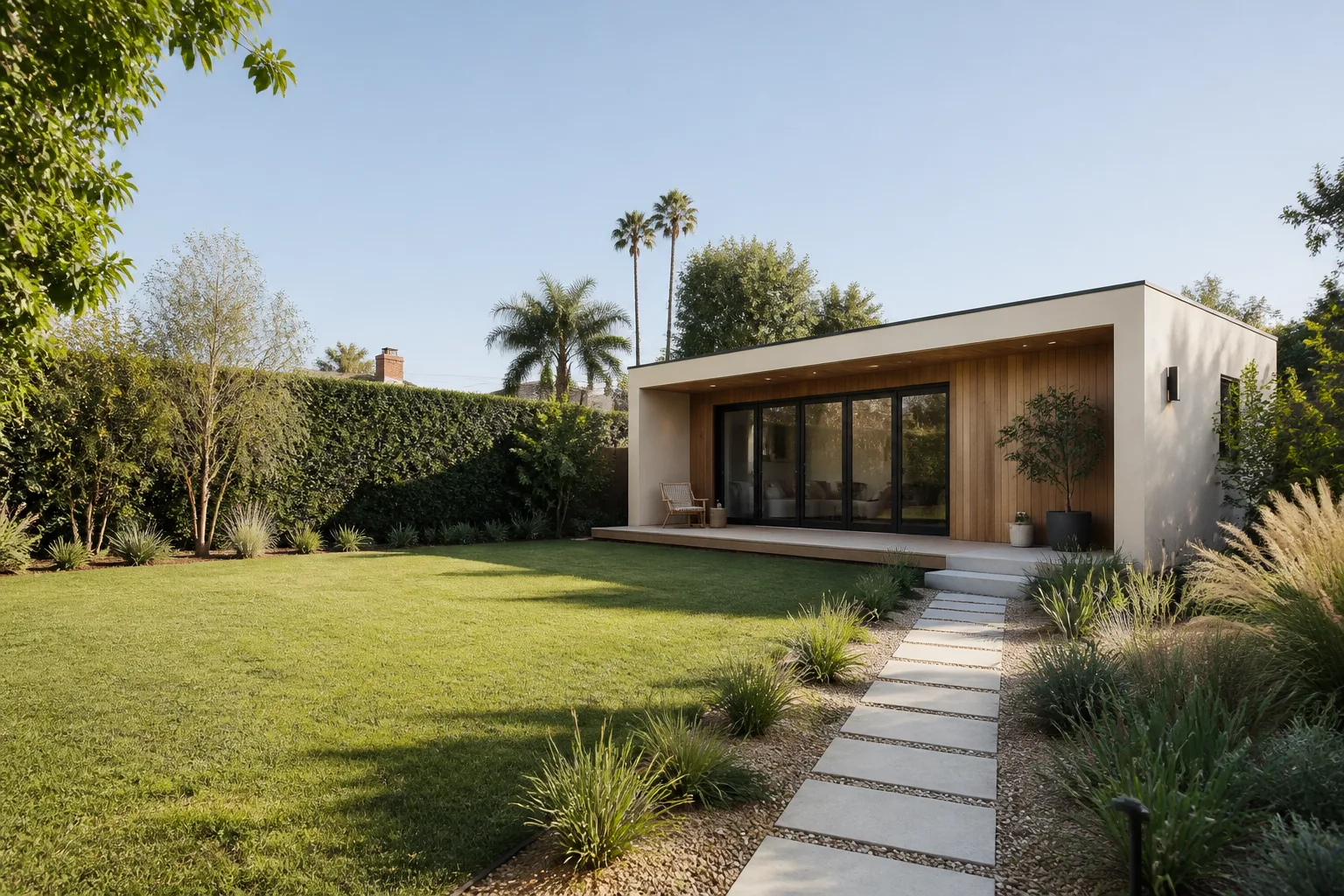
A new detached ADU in San Diego typically costs between $180,000 and $350,000, including design, permits, site work, and finishes. See our ADU Cost Breakdown: The San Diego Homeowner’s Reference for 2026 for detailed line-item guidance. Garage conversions run lower, often $80,000 to $150,000, because the shell already exists. Prefab ADUs start at a lower factory price but site work, foundations, utility connections, and San Diego permits can add $50,000 to $100,000 to the final number. Call (619) 376-2760 for a free written estimate on your specific lot.
Plan on 9 to 18 months from design start to certificate of occupancy for a site-built ADU in San Diego. The timeline splits into design and plan check (3 to 6 months), permit issuance (1 to 3 months with San Diego’s plan check turnaround), and construction (4 to 9 months). A garage conversion typically completes faster, often 4 to 7 months of construction. Prefab builds can shorten the construction phase meaningfully, but plan check and site work still take time. Call (619) 376-2760 for a realistic timeline on your project.
Yes, every ADU in San Diego requires a permit, including garage conversions and prefab installations. California state law has streamlined ADU permitting, but San Diego still requires plan submittal, plan checks, inspections, and a final certificate of occupancy. Working without permits means the structure is an unpermitted conversion, which creates problems when you sell, refinance, or insure the property. The right contractor handles the entire permit process for you.
No. In California, contractors performing work over $500 must hold a CSLB license, and an unlicensed contractor cannot legally pull permits. If you hire an unlicensed worker and something goes wrong, you have little legal protection, your homeowner’s insurance may deny a claim, and you bear the liability for any injuries on the site. The savings disappear the moment a problem appears.
A garage conversion is a specific type of ADU, an accessory dwelling unit, where an existing attached or detached garage is converted into livable space. The conversion usually preserves the garage’s structure but adds insulation, drywall, flooring, plumbing, electrical, and often a new foundation or slab reinforcement. Conversions cost less than new construction because the roof, walls, and foundation partially exist already. Here’s our full guide to garage conversion contractors in San Diego if you’re considering this route.
The right answer depends on your lot, your timeline, and your budget. Site-built ADUs allow design flexibility and handle complex San Diego lots better, especially slopes and tight access. Prefab systems from companies like Cover, Dvele, Mighty Buildings, or Boxabl can compress construction time but require careful site preparation, foundation work, and utility connections that many homeowners underestimate. The factory price is never the whole cost. The honest approach is to price both against your specific lot. Call (619) 376-2760 and we’ll walk your property to help you understand the real numbers for either path.
The Bottom Line
Hiring an ADU contractor in San Diego is about paperwork before it’s about hammers. Verify the license, bond, and workers’ comp in the first five minutes. Require the five written documents and don’t sign without them. Read the bid for red-flag language and structure the draw schedule so your money lags the work. Ask interview questions that expose real San Diego ADU experience, then compare line items, not bottom lines. For more on our approach and what we bring to the work, see our ADU builders page for San Diego.
Written by Russ Delmar, Owner at Lodgewick ADU San Diego, serving San Diego since 2010.