Last updated October 15, 2026
The Complete Guide to ADU in San Diego
San Diego permitted more ADUs in 2023 than any other California city, and a significant share of those projects ran over budget or stalled at inspections because owners didn’t know the city’s utility-connection trigger points before they broke ground. This guide and our more guides & resources exist so you don’t join that statistic. We’re going to walk through every fork in the road: the three ADU types San Diego actually approves, what the city charges for utility upgrades versus what your electrician might quote, the real permit timeline in the current queue, and the owner-occupancy rules that determine when you can legally rent the unit. By the end, you’ll know exactly what you’re committing to before you sign anything.
Quick Answer
An ADU in San Diego is a secondary housing unit on a single-family lot, and the city approves three types: attached ADUs, detached ADUs, and Junior ADUs (JADUs) carved out of existing space. Most homeowners pay between $180,000 and $350,000 for a detached one-bedroom unit when built from the ground up, while garage conversions typically run $90,000 to $180,000. The city’s Development Services Department currently processes ADU permits in roughly 4 to 8 months depending on whether your project hits any utility-trigger thresholds, and the owner-occupancy requirement was suspended through January 1, 2030, meaning you can rent both the main house and the ADU for now.
Table of Contents
- The Three ADU Types San Diego Approves (and Which Lots Rule Each Out)
- San Diego’s Owner-Occupancy Rules and Rental Income Timing
- Utility Connections: When San Diego Requires a Full Lateral Upgrade
- The Real Permit Timeline in San Diego’s Current Queue
- What ADUs Actually Cost in San Diego, Line by Line
- What “Done Right” Means: Inspections, Title 24, and Certificate of Occupancy
- Common Mistakes to Avoid
- When to Call a Professional
- Frequently Asked Questions
- The Bottom Line
The Three ADU Types San Diego Approves (and Which Lots Rule Each Out)
San Diego’s municipal code recognizes three distinct ADU categories, and each one has a different set of lot-size and setback rules. Knowing which one your property qualifies for before you pay an architect or designer is the single biggest money-saver in this entire process. Here’s how they break down:
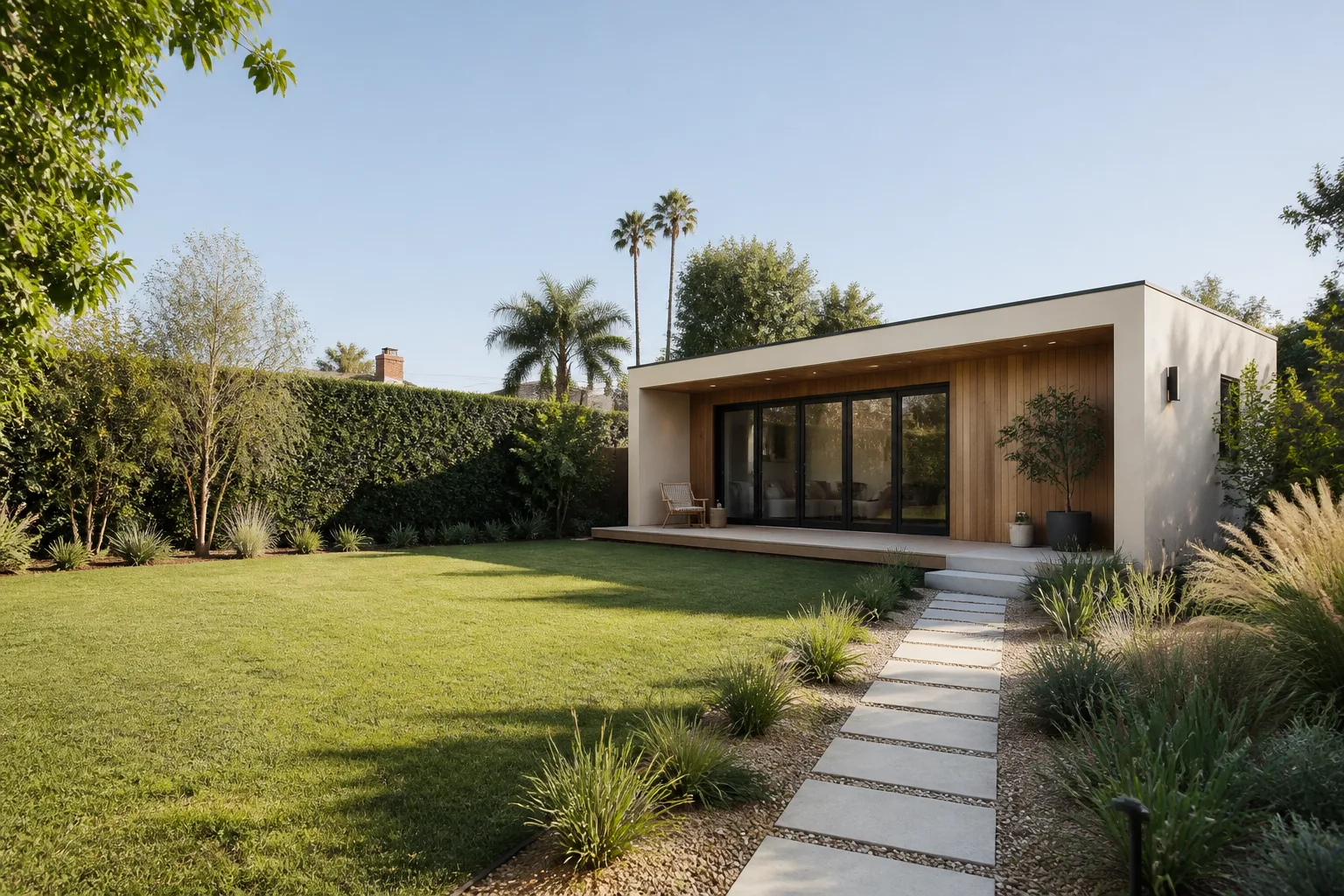
- Detached ADU: A freestanding unit, either built on-site from framing or delivered as a prefab module. San Diego allows detached ADUs up to 1,200 square feet regardless of the lot’s floor area ratio. The minimum lot size for a detached unit is 3,200 square feet in most single-family zones, though some coastal overlay zones in La Jolla, Point Loma, and Ocean Beach layer on additional coastal development permit requirements that can add months.
- Attached ADU: An addition that shares a wall with the main house, typically converted from a spare bedroom wing or built as an extension. Attached ADUs can go up to 50% of the main home’s square footage, capped at 1,200 square feet. Lots smaller than 3,200 square feet that can’t fit a detached unit can often still accommodate an attached one, because the side and rear setback requirements are less restrictive when the unit shares a structural wall.
- JADU (Junior Accessory Dwelling Unit): A unit of 500 square feet or less created entirely within the existing footprint of the main house, usually by converting a bedroom, den, or attached garage with interior access. JADUs in San Diego don’t require a separate sewer or water connection, which eliminates the biggest utility wildcard. They do require the main house to remain owner-occupied at all times, even under the current suspension of the standard ADU owner-occupancy rule.
Here’s the part most guides skip: the lot-size rules aren’t the only thing that rules a detached ADU out. San Diego’s brush management requirements in fire-prone areas like Scripps Ranch, Rancho Peñasquitos, and parts of Tierrasanta can force a homeowner to create 100 feet of defensible space that eats into the buildable area on an already tight lot. A garage conversion skips that entirely, because the building envelope already exists. If you’re evaluating your lot, start with the ADU Builders in San Diego page to see what we pull from the city before recommending a path.
San Diego’s Owner-Occupancy Rules and Rental Income Timing
California state law suspended the owner-occupancy requirement for ADUs statewide through January 1, 2030, and San Diego follows that framework. What that means in plain English: until 2030, you can rent your ADU to a tenant while living elsewhere, and you can also rent the main house and the ADU to two separate households. Starting January 1, 2030, the suspension expires unless the state legislature extends it again, and San Diego homeowners should plan around that date rather than assume a renewal.
The JADU exception is the one that trips people up. A JADU, because it’s carved out of the main home’s existing footprint, requires the property owner to live in either the main house or the JADU at all times. That’s true today, and it remains true after 2030 unless the law changes. For homeowners in University City, Clairemont, or Mira Mesa who want to rent both units and move out entirely, a JADU is the wrong vehicle. A detached or attached ADU gives you the rental flexibility you’re actually looking for.
Rental income timing depends on when the city issues your certificate of occupancy. You can’t legally collect rent on an ADU until the final inspection passes and the Development Services Department records the unit. In our experience, homeowners who start marketing their ADU before the certificate is issued end up with a disappointed prospective tenant and no way to sign a lease. Plan your first rental date no earlier than two weeks after your scheduled final inspection, because San Diego inspectors frequently flag minor corrections that require a reinspection visit.
Utility Connections: When San Diego Requires a Full Lateral Upgrade
This is the fork in the road that blows more San Diego ADU budgets than any other single factor, and it’s rarely discussed in the glossy brochures. Here’s how it works: every new ADU needs water, sewer, and electrical service. The question is whether your existing connections can handle the added load, and San Diego’s Public Utilities Department has specific trigger points that decide the answer.
For water and sewer, the threshold is the size and condition of your lateral line. A lateral is the pipe that runs from your house to the city main under the street. If your existing lateral is 4 inches in diameter and in good condition, you can typically connect the ADU’s plumbing to it. If it’s 3 inches, or if it’s old clay pipe with root intrusion or cracks (common in homes built before 1960 in North Park, South Park, and Normal Heights), the city will require a full lateral replacement. That means trenching through your yard and possibly cutting into the street, and the cost ranges from $8,000 to $25,000 depending on the distance to the main and whether the street cut requires a traffic control plan.
For electrical, the trigger is your panel capacity and the distance from the panel to the new unit. A modern 200-amp panel with open breaker slots can usually support an ADU with a simple subpanel addition, which runs $1,500 to $3,500. An older 100-amp panel (standard in homes built through the 1970s) typically can’t, and a panel upgrade to 200 amps runs $3,000 to $6,000. Add the cost if your ADU has an electric heat pump water heater, an induction cooktop, and a level 2 EV charger, you may need a dedicated 100-amp subpanel and heavier-gauge wire that adds another $4,000 to $8,000. In neighborhoods like University Heights and Hillcrest where garages sit at the back of deep lots, the trenching distance alone can add $3,000 to $5,000 to the electrical bill.
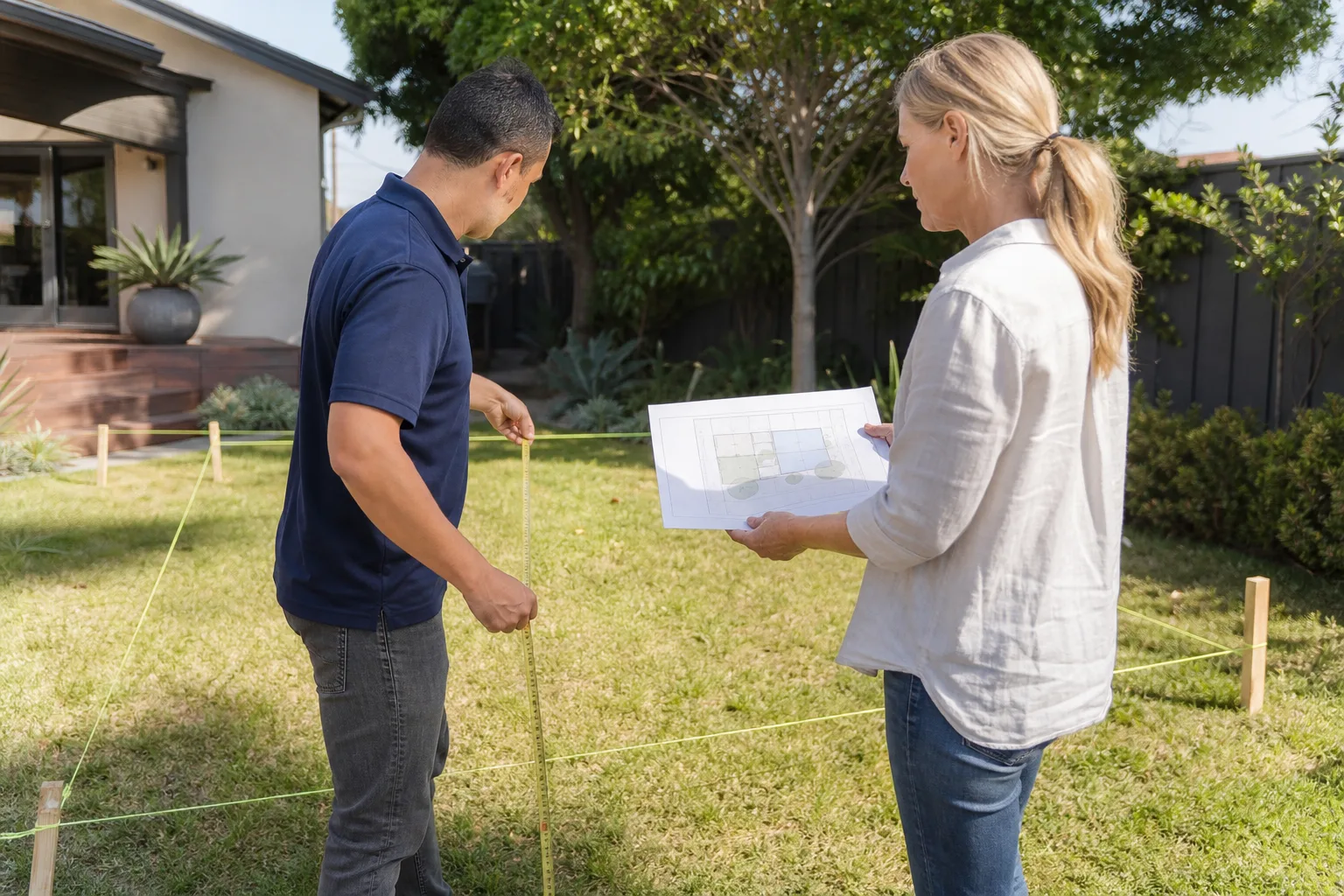
Get a utility assessment in writing before you commit to a design. A reputable Home Addition Contractor in San Diego will pull the city’s record drawings for your lateral and schedule a panel inspection during the estimate phase, not after you’ve signed.
The Real Permit Timeline in San Diego’s Current Queue
The brochure timeline says 60 days for plan check. The real timeline, as of the current Development Services queue, looks more like this:
- Week 1-2: Submit drawings and application through the city’s online portal. If any required document is missing, the clock doesn’t start until you resubmit.
- Weeks 3-12: Plan check review. Simple JADU conversions inside the existing footprint often clear in 4 to 6 weeks. Detached ADUs with new utility connections typically take 8 to 12 weeks because the Public Utilities Department reviews them separately from building plan check.
- Weeks 13-16: Revisions and resubmission. First-pass approval is rare on detached units. Expect one to two rounds of comments, each adding 2 to 3 weeks.
- Week 16-18: Permit issuance. You pay the fees and receive the approved plans.
Total: 4 to 6 months for a detached ADU, 3 to 4 months for a JADU or a simple interior garage conversion. Coastal overlay properties in La Jolla, Pacific Beach, and Ocean Beach add a coastal development permit on top, which can add an additional 2 to 4 months depending on whether the project triggers public noticing. If you’re weighing a prefab ADU from a manufacturer like Boxabl or Plant Prefab, the factory build time runs parallel to your permit review, which can shave 6 to 8 weeks off the total calendar compared to a stick-built unit.
What ADUs Actually Cost in San Diego, Line by Line
San Diego ADU pricing breaks into three buckets: design and permitting, site work and utilities, and construction. Here are the ranges we see across the city, from Chula Vista-adjacent neighborhoods like San Ysidro and Otay Mesa up through Mira Mesa and Rancho Bernardo:
- Design and permitting: $8,000 to $18,000 for architectural drawings, structural engineering, Title 24 energy calculations, and city permit fees. JADUs trend toward the lower end because the structural scope is smaller.
- Site work and utilities: $10,000 to $35,000. This covers trenching, lateral replacement if triggered, panel upgrades, and site prep. This is the bucket with the widest range, and it’s the one where the utility triggers from the previous section live.
- Construction: $250 to $450 per square foot for stick-built detached ADUs. A 600-square-foot one-bedroom typically lands between $150,000 and $270,000 for the build itself. Garage conversions come in lower because the shell exists: $120 to $200 per square foot, so a 400-square-foot conversion runs $48,000 to $80,000.
- Prefab alternatives: Boxabl’s Casita unit and Plant Prefab’s one-bedroom models typically cost $45,000 to $120,000 for the module itself, then site work, foundation, and assembly run another $50,000 to $100,000. The total lands near stick-built pricing on simple lots, but the timeline is tighter and the factory build removes weather delays.
A realistic all-in budget for a detached one-bedroom ADU in San Diego is $220,000 to $380,000. A garage conversion lands at $90,000 to $180,000. A JADU inside the existing home runs $50,000 to $100,000. If someone quotes you $60,000 for a detached unit, the quote is missing something, and you’ll find out what it is after demolition starts. For a deeper look at garage conversions specifically, see the Garage Conversion Contractor in San Diego page where we break down the line items that move the number.
What “Done Right” Means: Inspections, Title 24, and Certificate of Occupancy
“Done right” gets thrown around a lot. In San Diego, it means something specific, and it’s all on paper. Here’s what the city actually checks before you can call the project complete:
- Foundation inspection: For new detached units, the city verifies footing depth, rebar placement, and anchor bolts before concrete is poured. This check exists because San Diego’s expansive clay soils in neighborhoods like Serra Mesa and Kearny Mesa shift seasonally and will crack a shallow foundation.
- Framing inspection: The inspector verifies wall framing, roof structure, shear walls, and hold-downs. San Diego is in seismic design category D, so the structural requirements are stricter than what you’d see in Riverside or Imperial County.
- Title 24 energy compliance: California’s energy code applies to every ADU, and in San Diego’s coastal climate zone, that mostly means insulation levels, window glazing, and a heat pump or high-efficiency water heater. The Title 24 compliance certificate is generated during design and verified at final inspection.
- Electrical, plumbing, and mechanical rough-in inspections: These happen before drywall goes up. The inspector checks wire gauge, pipe slope, and venting. After drywall, a final inspection covers outlets, fixtures, and appliance connections.
- Final inspection and certificate of occupancy: The last visit confirms the unit meets all approved plans. The certificate of occupancy is the document that makes the ADU legal to live in or rent. Without it, you have an expensive shed.
Each of these steps generates a sign-off in the city’s records. A contractor who says inspections don’t matter is telling you they don’t know how the process works. The Kingswell Guarantee at Lodgewick ADU San Diego home puts it in writing: every project gets a written price before work starts, a defined arrival window, a clean job site, and a written guarantee on the finished build. If something fails within 365 days, we come back and fix it, free.
Common Mistakes to Avoid
- Skipping the utility assessment before drawing plans. A homeowner in Clairemont paid $12,000 for full architectural drawings, then discovered the sewer lateral was 3-inch clay pipe that the city would require replaced. The redesign added $9,000 and four months.
- Assuming the owner-occupancy suspension covers JADUs. It doesn’t. JADUs always require owner-occupancy. If you want to rent both units and live elsewhere, build a detached or attached ADU.
- Choosing the cheapest bid without checking what’s excluded. In San Diego, below-market ADU bids usually exclude site work, utilities, or the city’s school impact fees, which run $4 to $8 per square foot depending on the school district.
- Ignoring the coastal overlay. Properties west of I-5 in La Jolla, Pacific Beach, and Ocean Beach often trigger a coastal development permit that adds months to the calendar. Find out before you sign a leaseback agreement with a tenant.
- Buying a prefab unit before checking the lot’s access path. Boxabl, Tuff Shed, and Plant Prefab units arrive on a truck. If your side yard is 36 inches wide and the unit is 12 feet wide, the crane drops it elsewhere or you pay for street closure and a mobile crane that runs $4,000 to $8,000 extra.
- Collecting rent before the certificate of occupancy. It’s illegal, and San Diego’s code enforcement division has fined homeowners who rented unpermitted units. Wait for the certificate.
- Trusting a verbal price. The price should be in writing with a scope of work attached. If it’s not on paper, it doesn’t exist. That’s the entire premise of The Kingswell Way at Lodgewick ADU San Diego.
When to Call a Professional
You should call a professional before you spend money on drawings, not after. Specifically: if your home was built before 1980 and you suspect an old electrical panel or clay sewer lateral, if your lot has any slope or drainage issues, if you’re within a coastal overlay zone, or if a contractor has given you a verbal price without a written scope. These are the situations where a mistake costs five figures. Lodgewick ADU San Diego offers free estimates across the city and is led by Russ Delmar, who has been building in this market since 2010. The company brings the same Kingswell Guarantee to every project: written price first, defined arrival window, clean job site, written guarantee. Call (619) 376-2760 to schedule your free estimate.
Frequently Asked Questions
A detached ADU in San Diego takes 8 to 14 months from design to certificate of occupancy, with 4 to 6 months of that spent in permitting and plan check. A garage conversion or JADU typically finishes in 5 to 9 months. Prefab units from manufacturers like Boxabl or Plant Prefab can compress the construction window by 6 to 8 weeks because the factory build runs parallel to your permit review. Call (619) 376-2760 for a timeline tied to your specific lot and project type.
A detached one-bedroom ADU in San Diego costs $220,000 to $380,000 all-in, including design, permitting, utilities, and construction. Garage conversions run $90,000 to $180,000, and JADUs inside the existing home run $50,000 to $100,000. The single biggest variable is whether your sewer lateral or electrical panel triggers a city-required upgrade, which can add $8,000 to $25,000. Call (619) 376-2760 for a written line-item estimate.
Yes, through January 1, 2030, California’s owner-occupancy suspension allows San Diego homeowners to rent both the ADU and the main house without living on the property. After that date, the suspension expires unless the state extends it, so build rental income projections around the current law and have a contingency plan. JADUs are the exception: they always require the owner to live on-site.
An ADU is a separate unit with its own entrance, kitchen, and bathroom, and it can be attached or detached from the main house, while a JADU is 500 square feet or less, carved from the existing footprint of the main home, and can share a bathroom with the main house. JADUs don’t require separate utility connections, which saves $10,000 to $30,000, but they permanently require owner-occupancy. ADUs offer full rental flexibility during the suspension period.
San Diego doesn’t require solar panels on ADUs under 500 square feet, but detached ADUs over 500 square feet must comply with California’s Title 24 solar requirements or pay a compliance fee into the city’s renewable energy fund. Most homeowners in San Diego choose a 2 to 4 kW rooftop array, which adds $6,000 to $12,000 to the project. A Title 24 energy consultant can calculate your exact requirement during the design phase.
Not with a written fixed-price contract. San Diego homeowners most often see price changes when the contractor’s initial bid excluded utilities, site work, or permits, and those costs surface mid-project-exactly why our Home Addition Contractor Maintenance Checklist for San Diego Homeowners emphasizes written scope verification. Lodgewick ADU San Diego puts the written price in your hands before any work starts, with no change orders at the door. Call (619) 376-2760 to see the written estimate for your project.
The Bottom Line
An ADU in San Diego is a $100,000 to $380,000 commitment, and the difference between a project that stays on budget and one that stalls comes down to three things: knowing which ADU type your lot actually supports, getting a utility assessment in writing before you pay for drawings, and working with a builder who puts every commitment on paper. See our DIY vs Professional ADU: The San Diego Homeowner’s Decision Guide to weigh your options. The owner-occupancy suspension through 2030 makes right now a practical window for rental income, and the city’s permit queue rewards homeowners who submit complete applications the first time. Get the written price, check the utility triggers, and hold the line on inspections. That’s the whole game.
Written by Russ Delmar, Owner at Lodgewick ADU San Diego, serving San Diego since 2010.