Last updated October 15, 2026
DIY vs Professional ADU: The San Diego Homeowner’s Decision Guide
Here’s a fact most ADU YouTube tutorials skip: California’s owner-builder permit is completely legal to use on an accessory dwelling unit, but in San Diego, if you rent that ADU within three years of completing it, state law presumes you built it for sale. That presumption triggers contractor licensing requirements you did not meet, and it carries criminal liability under California Business and Professions Code 7028. This guide walks through exactly what an owner-builder permit in San Diego allows, what it quietly prohibits, which ADU phases genuinely reward DIY labor, and which ones produce rework bills that make professional pricing look cheap. For more guidance, see our How to Hire a ADU Contractor in San Diego: A Step-by-Step Guide. You’ll finish with a clear-eyed way to decide which path fits your San Diego lot, your budget, and your tolerance for city inspections.
Quick Answer
For most San Diego homeowners, the smart split is this: hire a licensed contractor for permitting, foundation, framing, and all MEP (mechanical, electrical, plumbing) rough-in work, then take on finish work like paint, trim, landscape, and fixture install yourself after inspections are signed off. Full DIY on an ADU in San Diego is legally possible under an owner-builder permit, but it rarely saves money once you factor in permit resubmission fees, failed inspections, construction-loan restrictions, and the three-year rental prohibition. Partial DIY with professional oversight is where the real savings live.
Table of Contents
- What San Diego’s Owner-Builder Permit Actually Allows (and What It Prohibits)
- The Three-Year Rental Restriction Most Homeowners Never Hear About
- Three ADU Phases Where DIY Costs More Than It Saves
- Where Legitimate Partial DIY Makes Sense: The Finish-Phase Sweet Spot
- The Insurance Gap: Your Policy During Construction and After
- What a DIY Mistake Actually Costs: San Diego Rework Numbers
- How to Evaluate a Written Guarantee Against DIY Risk
What San Diego’s Owner-Builder Permit Actually Allows (and What It Prohibits)
California Health and Safety Code Section 17910.5 lets a homeowner act as their own general contractor on a project, including an ADU, as long as they do not intend to offer the structure “for sale” after completion. The owner-builder permit in San Diego is real. It is legal. You can pull it as a homeowner, hire subcontractors directly for the work you cannot do yourself, and build a perfectly code-compliant accessory dwelling unit on your property. What the permit does not allow is less widely understood.
An owner-builder in San Diego cannot, under any circumstances, hire an unlicensed person to perform work that requires a contractor’s license, even if that person is a friend, a relative, or someone from Craigslist who “has done this a hundred times.” You can hire licensed subcontractors. You cannot act as a contractor yourself and pay unlicensed labor to do contractor work. That is the line, and crossing it is a misdemeanor on the first offense and a felony on the second. The city also requires you to sign a verification under penalty of perjury that you are building for your own use and occupancy, not for resale or rental speculation.
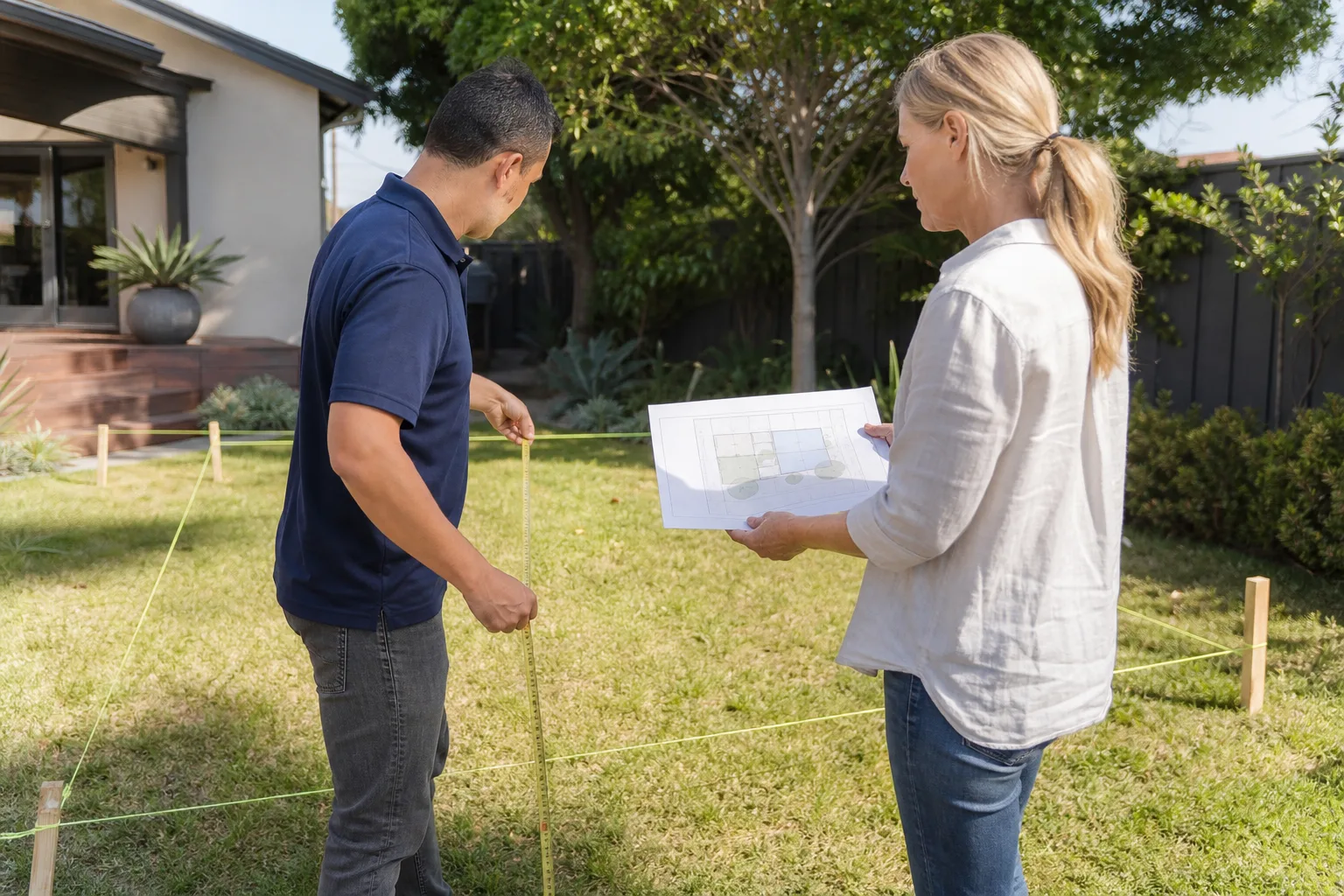
For San Diego specifically, the process adds layers. The City of San Diego Development Services Department reviews ADU permit applications for zoning compliance, fire code, and building code. You will submit plans, pay plan-check fees, address correction notices, and schedule inspections. A professional design and permit service typically charges $3,000 to $7,000 for that navigation alone in San Diego. An owner-builder does the same paperwork themselves, and the learning curve is measured in weeks, not hours.
The Three-Year Rental Restriction Most Homeowners Never Hear About
Here is the part that catches San Diego homeowners off guard. Under California law, if you build under an owner-builder permit and then rent the ADU, lease it, or even list it on Airbnb within three years of completion, there is a statutory presumption that you built it with the intent to sell. That presumption matters because it means you were required to hold a contractor’s license during construction, and you did not. The penalty structure sits in Business and Professions Code 7028, which can impose up to six months in jail and a $5,000 fine for a first offense where unlicensed contracting work exceeds $500 in value. For an ADU build, the work always exceeds $500.
Read that again: a San Diego homeowner who builds an ADU as an owner-builder, finishes it, rents it out for income in year two, and triggers a neighbor complaint or a code enforcement referral, has a statutory problem. The three-year rule does not say you cannot ever rent the ADU. It says that renting within three years creates a legal presumption that you intended the structure for sale from the start. The burden flips to you to prove otherwise. That is not a position you want to be in without a construction attorney on speed dial.
There is nuance worth knowing. You can build an ADU under an owner-builder permit for a family member, like an aging parent or adult child, without triggering the presumption. That use counts as your own occupancy. The moment rent changes hands, or a lease is signed, or a short-term rental listing goes live, the presumption kicks in for a full three years. Homeowners who plan to rent the unit should build it under a licensed contractor from day one. It is not a preference question. It is a legal structure question.
Three ADU Phases Where DIY Costs More Than It Saves
We have walked the aftermath of enough San Diego owner-builder projects to tell you where the money actually leaks; see our Home Addition Contractor Maintenance Checklist for San Diego Homeowners for related upkeep priorities. There are three phases of an ADU build where the do-it-yourself path consistently produces costs that exceed professional pricing. None of them involve a hammer. All of them involve paper, code, and the city of San Diego.
Phase 1: Permit Navigation and Plan Check
The City of San Diego’s ADU permit application includes zoning verification, fire department review for access, planning review for setbacks and lot coverage, and building plan check. A first-time owner-builder typically submits plans that bounce back with correction notices. Each resubmission costs money. Most San Diego ADU permit packages take two to four rounds of corrections before approval when prepared by someone who does not do this daily. Professional permit expediters and design firms in San Diego charge $3,000 to $7,000 for the full package. A do-it-yourselfer who values their own time at even $30 an hour will burn through that amount in evenings and weekends before the first inspection ever happens.
Phase 2: MEP Rough-In Inspections
Mechanical, electrical, and plumbing rough-in is where San Diego building inspectors fail the most owner-builder work. The rough-in phase requires exposed work to be inspected before walls are closed, which means if you get it wrong, you get a correction notice, a mandatory correction, a re-inspection fee, and a schedule delay measured in weeks. Common failures we see on San Diego ADU rough-ins: improper conduit fill calculations, incorrect drain slope, insufficient bracing on HVAC duct runs, and missing nail plates where wiring passes through framing. Hiring a licensed electrician and plumber for rough-in typically costs $12,000 to $20,000 combined on a 500-square-foot San Diego ADU. Paying for failed inspections and redoing work yourself costs more, and it costs it slowly.
Phase 3: Title 24 Compliance Documentation
California’s Title 24 energy code applies to every new ADU in San Diego, no exceptions. Compliance requires HERS testing (blower door, duct leakage, verified insulation), solar-ready documentation, and a full energy model filed with the state. Title 24 documentation is not optional paperwork. Without it, the city will not issue a final certificate of occupancy, which means the ADU cannot legally be inhabited. HERS raters in San Diego charge $800 to $1,500 for the required testing. The energy consultant who prepares the compliance documentation typically charges $1,200 to $2,500. An owner-builder who tries to skip Title 24 does not get an occupancy certificate. Period. That is a fixed, unavoidable cost, and it is included in every professional ADU build from the start.
Where Legitimate Partial DIY Makes Sense: The Finish-Phase Sweet Spot
The honest answer for most San Diego homeowners is not full DIY or full professional. It is the split. Once rough inspections are signed off and the walls are closed, the risk profile of the work changes dramatically. Finish-phase work is cosmetic, replaceable, and low-stakes when mistakes happen. A bad paint job costs a weekend and $200 in supplies. A bad plumbing rough-in costs thousands and opens walls. This is where you spend your DIY budget.
Here is the sequence that works, in order:
- After framing and MEP rough-in inspections pass, take over insulation installation if you want to. Blown-in and batt insulation in a small ADU is physically demanding but technically simple. You save $1,500 to $2,500 in San Diego labor costs.
- After drywall is hung and taped, do your own painting. Ceiling and wall paint in a 500-square-foot ADU runs $3,000 to $5,000 from a San Diego painting contractor. Materials cost under $800.
- After final electrical and plumbing are in, install your own light fixtures, faucets, towel bars, and cabinet hardware. These are finish items that do not require a licensed trade for owner-installation on your own property.
- After final inspection, handle landscaping, paver patios, planter boxes, and irrigation. San Diego’s Mediterranean climate makes drought-tolerant planting forgiving, and this is pure homeowner territory.
- Trim carpentry, like baseboards, door casings, and window sills, is learnable with a miter saw and patience. If you have never done it, budget for extra material on the first room.
Every step above happens after the inspector has signed a rough-in card. That is the line. Before the inspection signature, leave it to licensed trades. After the signature, the structural and life-safety risk drops to near zero, and your labor is genuinely valuable.
The Insurance Gap: Your Policy During Construction and After
This is the section that never appears in DIY ADU blog posts, and it should. When you build under an owner-builder permit in San Diego, your existing homeowner’s insurance policy does not automatically cover the construction. A standard HO-3 policy excludes work in progress and often excludes the entire structure once it exceeds cosmetic renovation. If a fire, theft, or injury happens on the job site during an owner-builder ADU project, you may have no coverage at all.
The solution is a builder’s risk policy, which costs $800 to $2,000 per year in San Diego depending on project value, or a construction rider on your existing policy from your current carrier. Professional builders carry their own general liability and workers’ compensation insurance. When a subcontractor’s employee gets hurt on a professional ADU build, the contractor’s policy responds. When an unlicensed helper gets hurt on your owner-builder ADU build, your policy is the only wall between you and a personal injury lawsuit, and standard homeowner’s policies frequently deny those claims. In San Diego, where the average ADU build ranges from $180,000 to $350,000 for a detached unit, the liability exposure is real.
After completion, the insurance picture shifts again. If you rent the ADU, your standard homeowner’s policy likely excludes the rental unit. You need a landlord policy or a dwelling fire policy, and the underwriter will ask who built the unit. An ADU built by a licensed contractor with permit history and a written warranty is insurable at standard rates. An owner-builder ADU often triggers additional underwriting review, a property inspection, and sometimes a surcharge. None of this appears in the savings math most homeowners do before they start a DIY project.
What a DIY Mistake Actually Costs: San Diego Rework Numbers
Let us put real numbers on DIY mistakes, because “mistakes are expensive” is a platitude, and platitudes do not help you decide. These are ranges we see on San Diego ADU projects when work has to be corrected.
- Failed framing inspection due to improper shear wall nailing: $1,800 to $4,000 to have a licensed carpenter correct the pattern, plus a $150 to $400 city re-inspection fee, plus two to three weeks of schedule delay.
- Improper drain slope on a bathroom rough-in: $2,500 to $6,000 to open walls, correct the pitch, replace drywall, and repaint. The original plumbing labor you paid was not saved; it was doubled.
- Missing Title 24 documentation at final inspection: $1,200 to $2,500 for an energy consultant to retroactively prepare compliance paperwork, plus $800 to $1,500 for HERS testing, plus a delay of two to eight weeks depending on consultant availability in San Diego.
- Unpermitted electrical work that fails final inspection: $3,000 to $8,000 for a licensed electrician to review, correct, and bring the entire circuit run to code, plus re-inspection fees.
- Improper setback or lot coverage that triggers a zoning violation: $5,000 to $15,000 in variance applications, planning fees, and potential redesign.
The common thread: every one of these corrections costs more than the original professional work would have cost, and each one happens under time pressure, which inflates labor rates.
How to Evaluate a Written Guarantee Against DIY Risk
A professional ADU contractor’s written guarantee is not marketing. It is the financial instrument that transfers rework risk off the homeowner’s balance sheet. When you read a contractor’s proposal, ignore the adjectives and look for four written commitments.
Written price before work starts. A Lodgewick ADU San Diego home build estimate includes a fixed, written price. No change orders appear at the door. No “we found something in the wall” markup games. If a San Diego contractor will not put the price in writing before work begins, that contractor is telling you how the project will be managed: loosely, and at your expense.
A defined arrival window. The Kingswell Way, the operating standard at Lodgewick, means saying the price before the work, showing up in the window given, and leaving the job site cleaner than found. Those three commitments are written into every project document. A contractor who cannot commit to an arrival window on a six-month ADU build will not commit to a completion date either.
A written guarantee covering the completed work. The 365-Day Done Right Promise is the specific written commitment behind every Lodgewick build: if the work is not right, the team comes back and makes it right. If the work fails within the 365-day guarantee period, the return visit is free. No hourly billing for warranty work. That is what a guarantee is supposed to do: cap your downside risk at a known number, which is zero for covered items.
Named materials and brands. A professional guide should name the products being installed. For San Diego ADU exteriors, ADU builders working with James Hardie siding get a 30-year non-prorated material warranty, which matters in a coastal climate where salt air attacks lesser products. Prefab options from Abodu and Dvele bring factory tolerance and third-party quality control. When a written proposal names these products, you can price them yourself. When it says “premium materials,” you cannot.
Compare the written guarantee against the DIY math. A professional build with a fixed price and a 365-day written warranty has a known downside: the project price. A DIY build has an unknown downside: the project cost plus whatever the rework totals when a rough-in fails or Title 24 documentation is missing. Unknown downside is the most expensive kind of risk a San Diego homeowner can take on a $200,000-plus investment.
What the City of San Diego Actually Checks During ADU Inspections
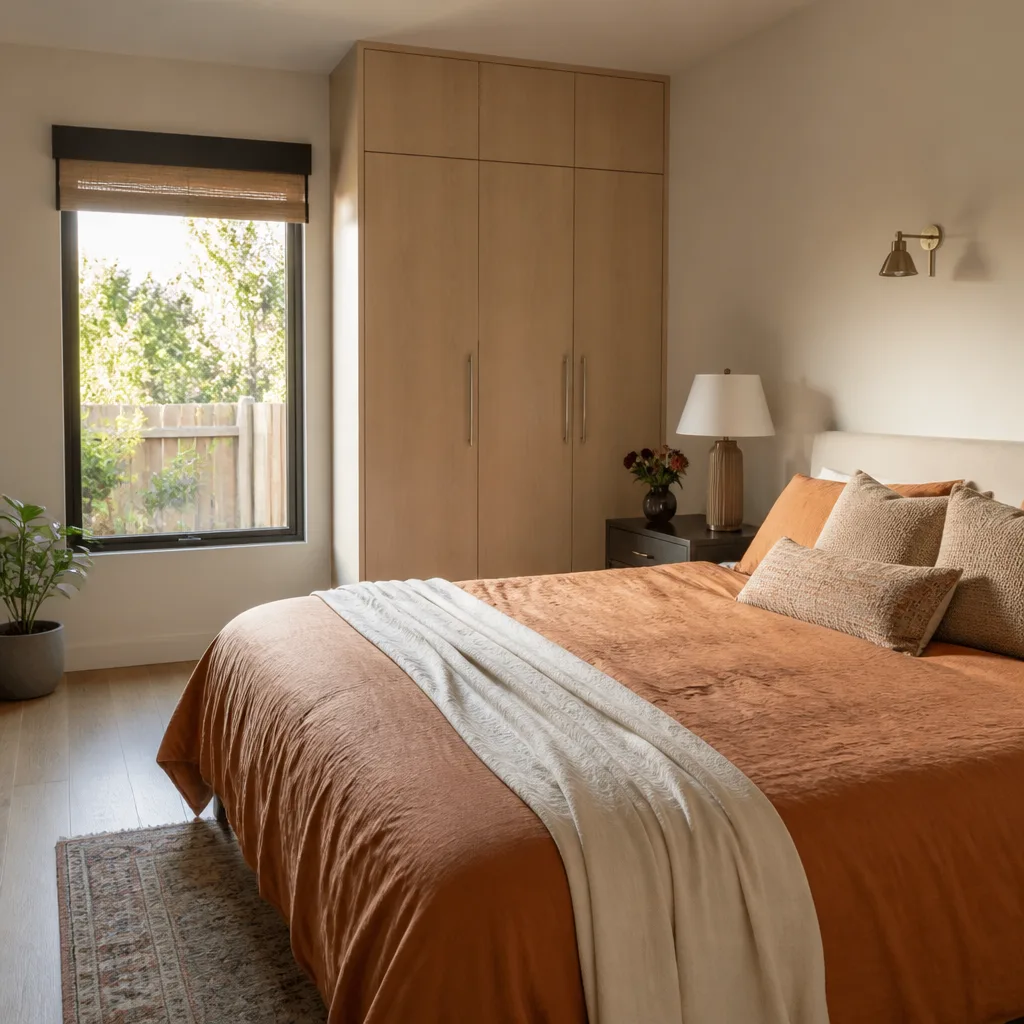
Knowing what the inspector looks for changes how you think about DIY scope. San Diego ADU inspections are not a rubber stamp. The city’s inspectors work from a checklist tied to the approved plans, and every departure from those plans requires a revision, a fee, and a delay.
A standard San Diego ADU inspection sequence follows this order:
- Foundation inspection: excavator is checked for depth and compaction; rebar spacing and placement are verified against the engineering drawings before the pour.
- Underslab plumbing inspection: drain lines, water supply, and ground work are inspected before concrete covers them.
- Shear wall and framing inspection: the inspector checks nail pattern, hold-down hardware, anchor bolts, and the structural connections specified in the approved plans.
- MEP rough-in inspection: electrical conduit fill, outlet spacing, GFCI placement, drain slope, venting, HVAC duct sealing, and water heater connections are all checked.
- Insulation inspection: the inspector verifies the R-value installed matches what the Title 24 energy model specified.
- Drywall nailing inspection: some San Diego inspectors check screw and nail spacing before allowing tape and texture.
- Final inspection: the inspector verifies all correction items are cleared, the site is safe, and the structure matches the approved plans.
Each failed inspection produces a correction notice. Each correction notice produces a re-inspection fee, which in San Diego currently runs from $150 to $400 per visit, depending on work type. A homeowner who fails four inspections has paid $600 to $1,600 in fees alone, not counting the cost of the corrections. Professionals fail inspections too, but at a much lower rate, because their work is built to code the first time by people who know what the inspector checks.
ADU Types in San Diego and Where DIY Fits Each One
San Diego recognizes several ADU types under state and local law, and the DIY-to-professional ratio changes depending on which type you build. A detached unit is a full construction project. A garage conversion is a retrofit. A JADU (junior accessory dwelling unit) is essentially an interior suite with a separate entrance. Understanding the category helps you understand the scope.
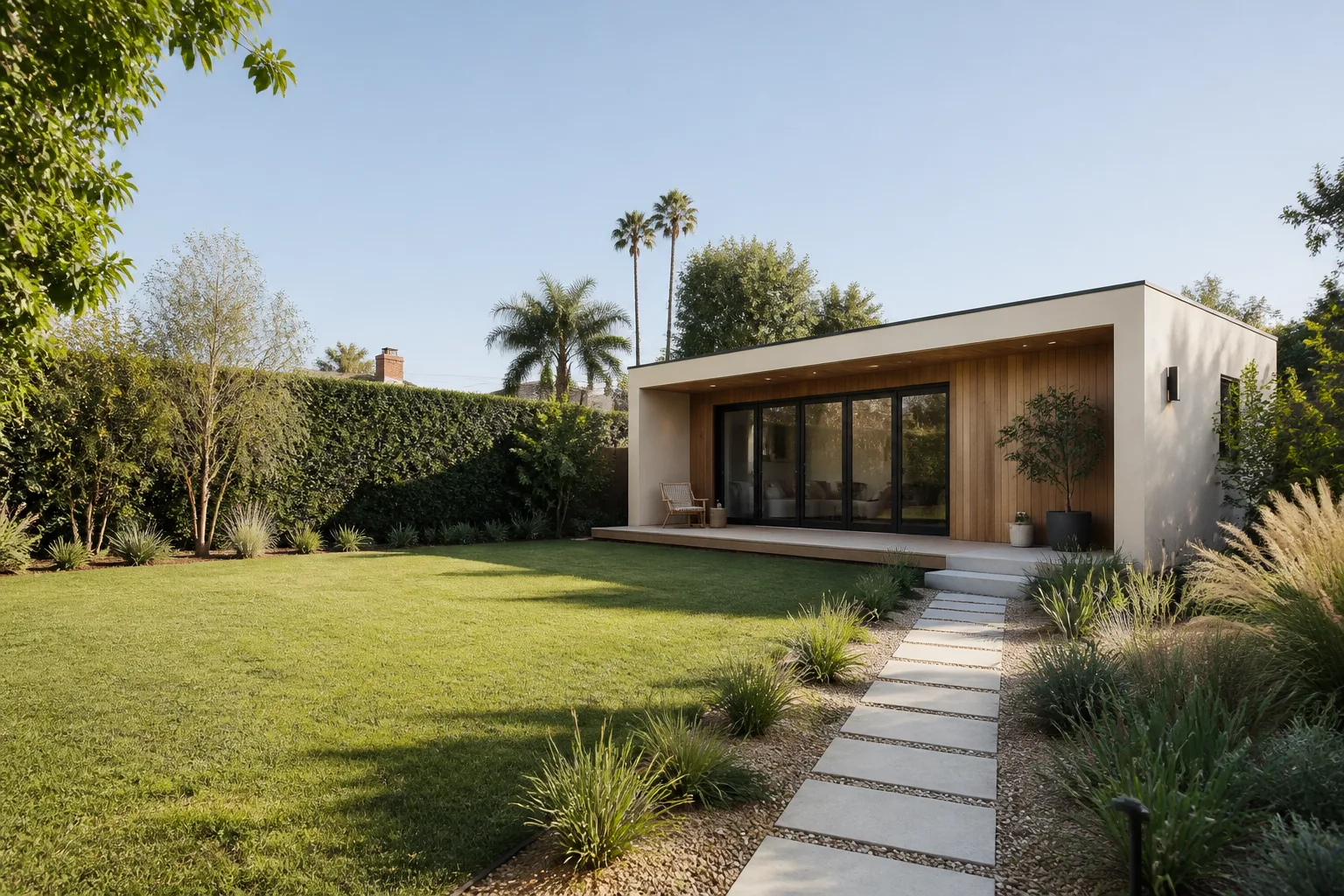
A detached ADU is a new structure on a new foundation with new utility runs. It is the most expensive type in San Diego, ranging from $180,000 to $350,000 for a typical 400 to 800 square-foot unit, and it is the least DIY-friendly. Foundation work, framing, electrical service upgrades, and sewer laterals are all licensed-trade territory. Finish-phase DIY applies, but the professional share is high.
A garage conversion is what it sounds like: converting an existing garage into living space. San Diego allows it, and it is typically the fastest and cheapest ADU path, ranging from $120,000 to $220,000 depending on the condition of the existing slab, walls, and roof. DIY potential is higher here because the shell already exists, but the electrical service upgrade, insulation retrofit, and any needed foundation repair remain professional work. A Garage Conversion Contractor in San Diego brings the existing structure up to living-space code, which is different from garage building code.
A JADU is a junior accessory dwelling unit: a conversion of existing space within the walls of the primary residence, no larger than 500 square feet, with its own entrance and efficiency kitchen. San Diego permits JADUs under streamlined state rules, and they are the most DIY-accessible ADU type because the structure, foundation, and roof already exist. Painting, trim, flooring, fixture install, and even some drywall work are realistic owner-builder territory. The range for a JADU in San Diego runs $60,000 to $120,000. You can see why the DIY appeal is strong here, and it is somewhat justified. A Home Addition Contractor in San Diego can help determine whether your existing space qualifies for JADU treatment or requires a full ADU build.
San Diego Market Reality: Resale Value and the Owner-Builder Record
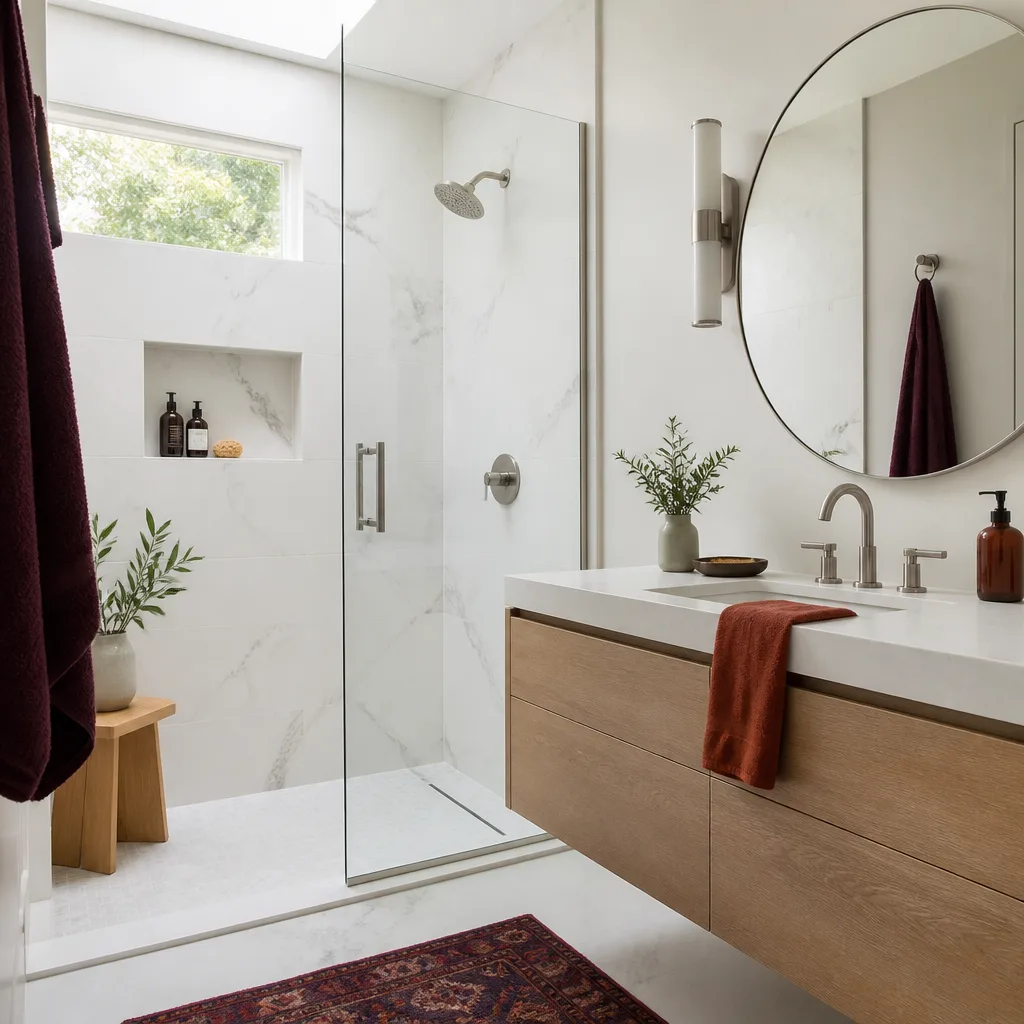
San Diego real estate is expensive, and an ADU adds measurable value. The accepted number for an income-producing ADU in a strong San Diego market is roughly $100 to $300 per square foot in incremental resale value, depending on neighborhood, finishes, and rentability. A 600-square-foot detached ADU built to code with a rental history can add $150,000 to $250,000 in value or more when you sell. That is the upside, and it requires a rental history, which brings us back to the three-year owner-builder rental restriction.
An owner-builder ADU carries a paper trail. The permit history in San Diego remains attached to the property in perpetuity. When you sell, the buyer’s agent pulls the permit record. If the record shows an owner-builder permit, and the ADU has been rented within three years, a sharp buyer-side inspector will flag it, and the buyer’s lender may scrutinize the unit. If the record shows correction notices and failed inspections, that is a negotiating point against you. If the record shows a licensed contractor, clean inspections, and a transferable written warranty, the ADU is an asset instead of a question mark.
The warranty itself transfers. The written guarantee documents that accompany a professional Lodgewick build stay with the house and the ADU. A home seller who can hand the buyer a folder with the original written price, the inspection sign-offs, the Title 24 compliance certificate, and the 365-Day Done Right Promise in writing, has created a much stronger negotiating position than one who says, “We built it ourselves, and it passed, mostly.”
Cost Comparison: Professional Build vs Hybrid DIY vs Full DIY
Here is the number picture the competitors do not want to print. These are San Diego ranges for a 500-square-foot detached ADU, built to current code, with licensed subcontractors for the permit-required trades in the hybrid and full-DIY scenarios.
- Full professional build: $180,000 to $260,000. Includes permit navigation, all trades, Title 24, warranty, fixed written price with a firm like Lodgewick.
- Hybrid (professional rough-in, DIY finish): $140,000 to $200,000. The homeowner saves finish-phase labor but assumes finish-phase risk, which is low.
- Full owner-builder with licensed subcontractors: $150,000 to $220,000. Marginal savings over full professional once you account for plan-check resubmissions, re-inspection fees, your own time, and the absence of a written warranty.
- Full owner-builder with unlicensed helpers: $80,000 to $140,000. This is the number that tempts people, and it is the number that comes with criminal liability, insurance gaps, rental restrictions, and often a structure that cannot legally be occupied.
The hybrid savings are real: $30,000 to $60,000 depending on how much finish work you do. The full owner-builder savings are illusory. What you “save” in labor, you spend in risk, time, and rework. That is why the hybrid is the rational default for capable San Diego homeowners, and the full professional path is the rational default for anyone who wants a fixed price and a written guarantee.
Common Mistakes to Avoid
- Pulling an owner-builder permit and planning to rent the ADU immediately. The three-year statutory presumption under California law means rental income within three years creates legal exposure you did not bargain for. If you plan to rent, build it professionally from the start.
- Assuming your homeowner’s insurance covers an active construction project. Standard San Diego homeowner’s policies exclude work in progress. Without a builder’s risk policy or a construction rider, you are self-insuring the build.
- Skimping on Title 24 documentation to save money. No Title 24 compliance means no occupancy certificate in San Diego, and no occupancy certificate means no legal inhabitance, no rental, and no resale value.
- Hiring unlicensed labor for electrical, plumbing, or structural work. This is the fastest way to turn a $180,000 project into a misdemeanor, an insurance denial, and a rework bill simultaneously.
- Viewing the permit as a formality rather than a process. San Diego plan check for ADUs is iterative and specific. Budget for two to three rounds of corrections and the corresponding fees.
- Ignoring the written warranty conversation until after work starts. A contractor who will not put the guarantee in writing before work begins has told you everything you need to know about what happens when something goes wrong.
- Doing finish-phase work before rough inspections are signed. Paint, trim, and fixtures go in after the inspector signs the rough-in card. Anything before that signature risks being torn out.
When to Call a Professional
If your San Diego ADU involves any of these, bring in a licensed contractor before you spend a dollar on materials. The list: new foundation work, any electrical service upgrade, sewer lateral connection, shear wall engineering, structural changes to an existing building, roof work on a garage conversion, or any plan that includes rental income within three years. The last one is not a judgment call. It is a legal structure decision. If you want the written price, the defined arrival window, the clean job site, and the written guarantee without any of the owner-builder exposure, Lodgewick ADU San Diego offers free estimates in San Diego, call (619) 376-2760. The price is in writing before any work starts, every time, no exceptions.
Frequently Asked Questions
Yes. California law allows a homeowner to pull an owner-builder permit and act as their own general contractor on an ADU. The restrictions: you cannot hire unlicensed workers for contractor-level work, you must sign under penalty of perjury that you are building for your own use, and renting the unit within three years triggers a legal presumption that you built it for sale, which requires a contractor’s license you do not have.
A 500-square-foot detached ADU in San Diego typically costs $180,000 to $350,000 depending on finishes, site conditions, and utility work. Garage conversions run $120,000 to $220,000. JADUs run $60,000 to $120,000. These are ranges for licensed, permitted builds with Title 24 compliance included.
Under California law, if you build an ADU under an owner-builder permit and rent it within three years of completion, the law presumes you intended the structure for sale from the start. That means you needed a contractor’s license during construction. Unlicensed contracting work over $500 is a misdemeanor in California, punishable by up to six months in jail and a $5,000 fine on a first offense. If you plan to rent your San Diego ADU, build it under a licensed contractor.
After rough inspections are signed off, finish work is fair game for a capable homeowner: painting, trim carpentry, fixture installation, cabinet hardware, landscaping, and paver work. Before the rough-in signature, leave foundation, framing, electrical, plumbing, and Title 24 compliance to licensed professionals.
Title 24 is California’s energy code. Every new ADU in San Diego must comply, which requires an energy model, HERS testing, and verified insulation and duct sealing. Without Title 24 documentation, the city will not issue a final occupancy certificate, and the ADU cannot legally be used. Compliance costs $2,000 to $4,000 in San Diego when done by professionals.
An owner-builder ADU with clean inspections and no rental history can still add value, but the permit record stays with the property. Failed inspections, correction notices, and an owner-builder permit with rental activity within three years all become negotiating points for buyers. A professionally built ADU with a transferable written warranty is a cleaner asset at resale.
The Bottom Line
The DIY versus professional ADU decision in San Diego is not a skills test. It is a legal and financial structure question. If you plan to rent the unit, build professionally. If you plan to keep it for family, the hybrid path, professional rough-in plus DIY finish, captures the savings that actually exist. Never cut the permit process, never skip Title 24, never hire unlicensed labor, and never accept a contractor’s word for a warranty unless it is in writing. The Kingswell Guarantee exists because homeowners have been burned by exactly these gaps: a written price before work starts, a defined arrival window, a clean job site, and a written guarantee, with a free return visit if the work fails within 365 days. That is the standard to measure every other option against.
Written by Russ Delmar, Owner at Lodgewick ADU San Diego, serving San Diego since 2010.