Tuff Shed Site Prep & Utilities: The San Diego Owner’s Guide
Site prep and utility rough-in for a Tuff Shed in San Diego typically runs $2,800 to $7,500 installed, depending on your lot’s slope, soil type, and how far your electrical and water lines need to travel. We stock the common Tuff Shed-compatible components on our trucks and can usually start within a week of your site assessment. Most San Diego owners discover their prep wasn’t done right the same way: the shed settled a few inches after the first winter rain, or the panel inside trips every time they plug in a saw because the original run was undersized for the load.
Here’s the thing most people don’t hear until it’s too late: a Tuff Shed is only as straight and dry as the pad underneath it. Tuff Shed warrants the structure, but they’ll tell you the foundation is on you. Get that wrong and you’ll chase door misalignment, corner gaps, and standing water under the floor for the life of the building. We fix existing prep problems as often as we do fresh installs, and we pull the permits San Diego requires so the utility work actually passes inspection. Lodgewick ADU San Diego is an independent service provider, not affiliated with Tuff Shed, but we work with their buildings every week.
Which Tuff Shed Models This Applies To
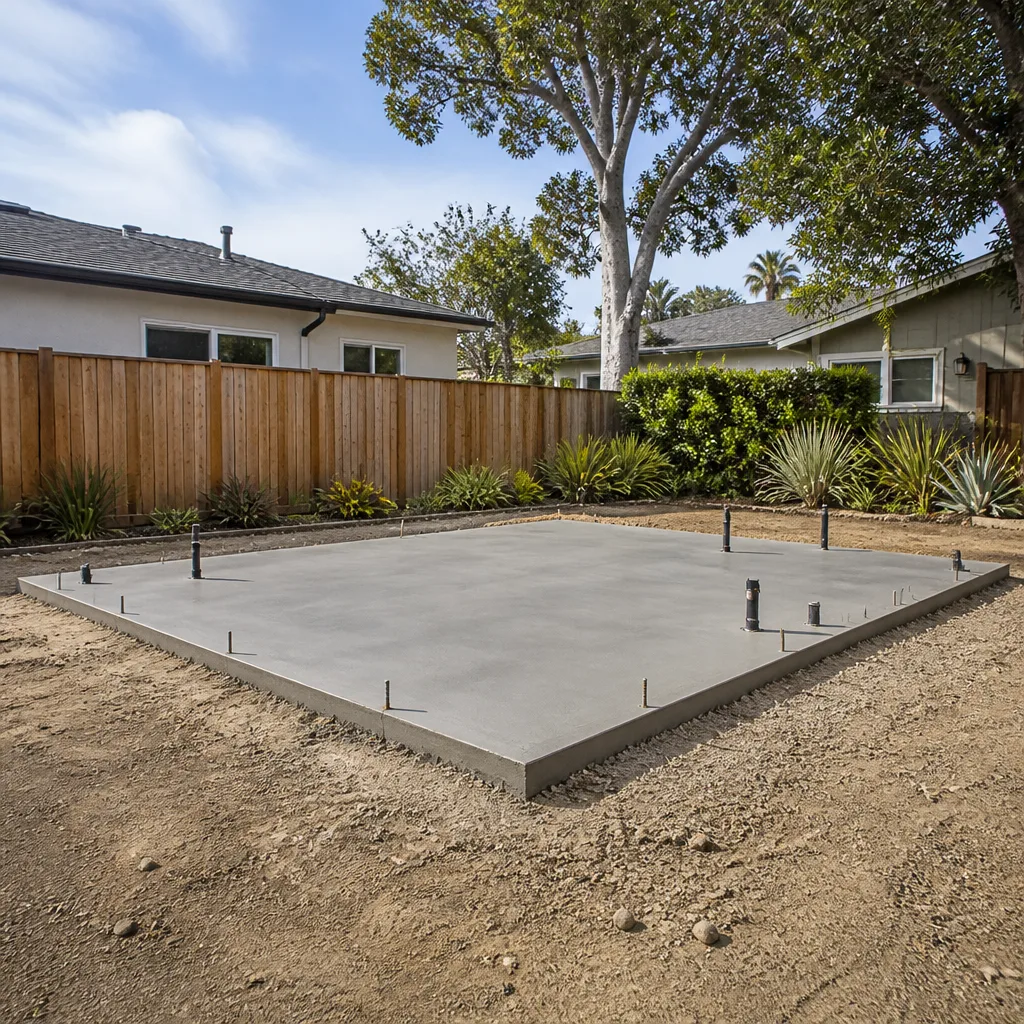
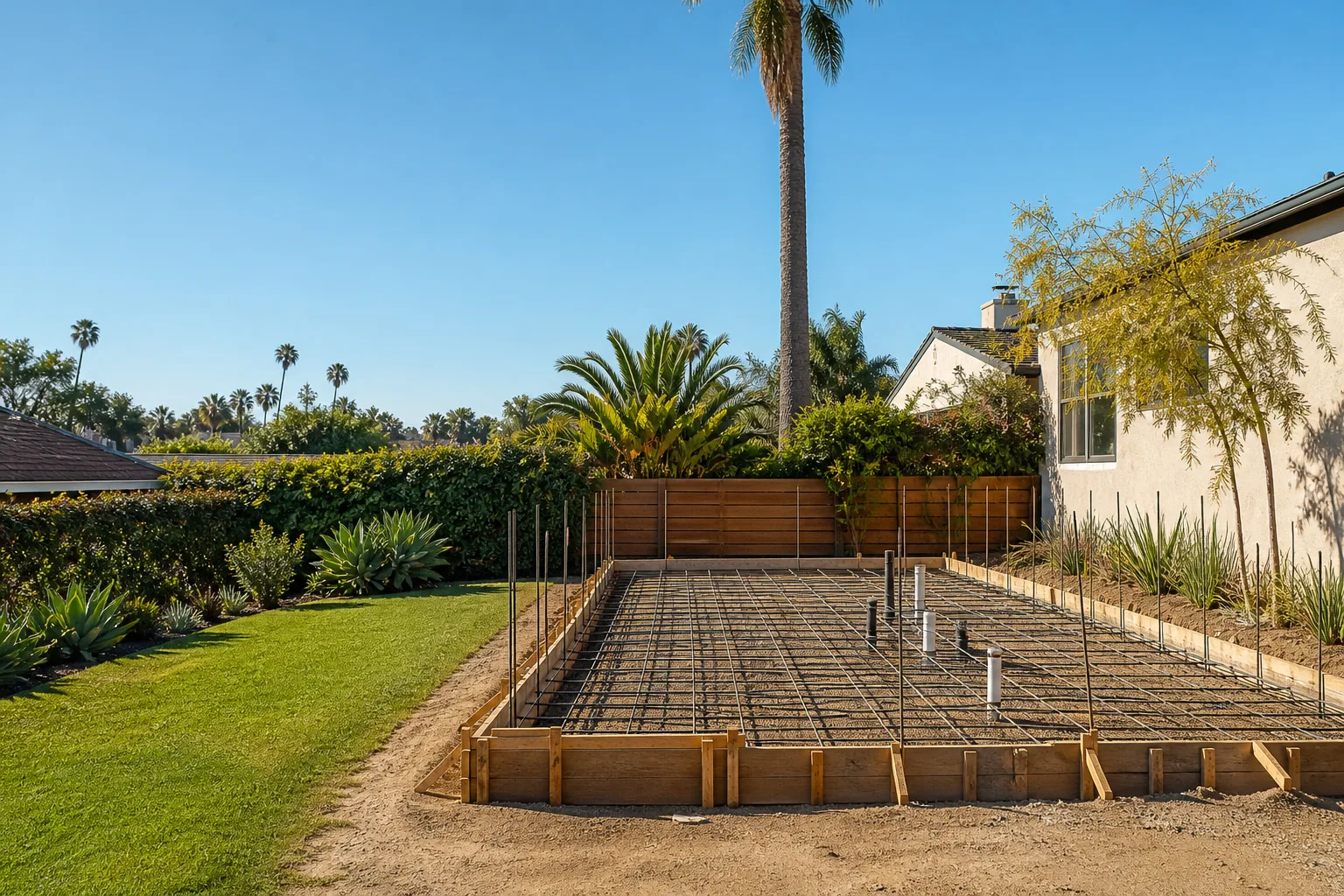
Site prep and utilities apply to every Tuff Shed line sold in San Diego County: the Premier Series (their flagship gable and barn styles), the Pro Series (taller walls, often used as workshops), the Ranch Series (budget-friendly, still needs a real base), and the two-story Premier Pro buildings that put real weight on footings. The compatibility issue isn’t the shed model so much as what you’re asking the building to do. A garden shed that stores a mower needs a compacted gravel pad. A workshop with a subpanel, lighting, and a table saw needs a reinforced concrete slab with conduit stubbed up in the right places. A backyard office or guest setup needs shed-to-house utility trenched lines that meet San Diego’s setback and depth codes.
If you’re matching parts to an existing Tuff Shed, look for the model label inside the door jamb: it lists the series, production date, and the recommended foundation spec. The big gotcha we see in San Diego is that coastal lots in places like Point Loma or Ocean Beach often have sandy, shifting soil that needs deeper excavation than Tuff Shed’s standard foundation drawings assume. Inland clay in El Cajon or Santee swells and shrinks seasonally. Both of those conditions change what “correct” site prep means. On the utility side, we prefer quality aftermarket rough-in components (sealed outdoor subpanels, PVC Schedule 40 conduit, GFCI-protected circuits sized for actual tool loads) over generic big-box kits, because Tuff Shed doesn’t manufacture electrical or plumbing components themselves. The aftermarket gear we install typically carries a longer manufacturer warranty than the basic kits.
Signs Your Tuff Shed Site Prep & Utilities Is Failing
- Doors stick, rub, or won’t latch after a season change. The framing is racking because the pad has settled unevenly. In San Diego’s wet winter/dry summer cycle, this often shows up in January or February, right after the ground finally gets real rain.
- Visible gap under one corner of the floor joists or shed skids. The base material wasn’t compacted in lifts, or water is eroding one side of the pad. Left alone, the floor will develop a bounce, then a crack.
- Breaker trips whenever you run more than one tool or appliance. The original electrical rough-in was sized for lights and an outlet, not the load you’re actually pulling. Undersized wire also gets warm under load, which is a fire risk you shouldn’t ignore.
- Water pools under or against the shed after rain. No perimeter drainage, no vapor barrier, or the pad sits too low relative to surrounding grade. In San Diego this is the number one cause of floor rot and mold inside the shed within five years.
- Concrete pad has hairline cracks spreading from one corner. Missing rebar, too-thin pour, or no control joints. Small cracks are cosmetic; cracks wider than a quarter inch that keep moving mean the slab is failing and the shed will follow.
Replacement Cost & What’s Included
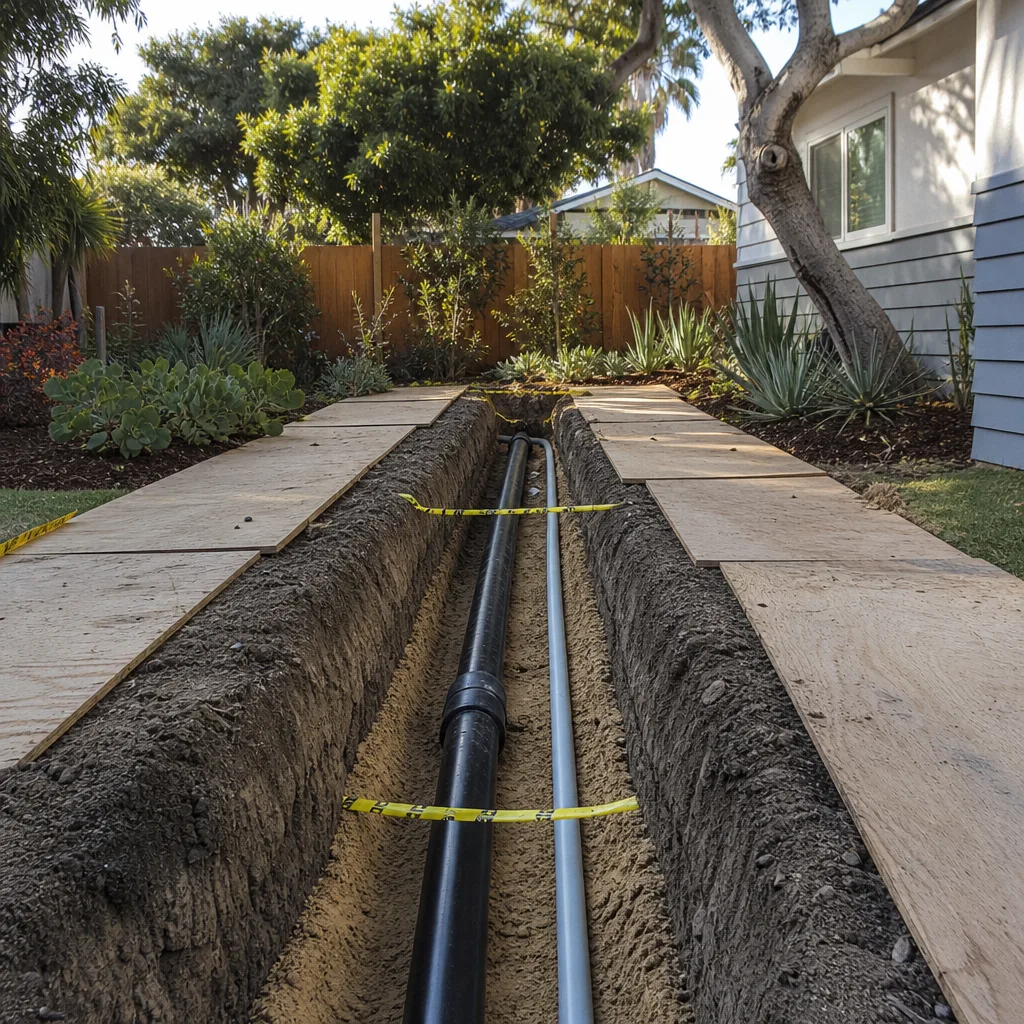
For a new site prep job on a typical San Diego lot, expect $1,800 to $4,200 for a compacted gravel or concrete pad sized to your Tuff Shed footprint, including excavation, base material, forms, pour or compaction, and cleanup. Utility rough-in runs $1,000 to $3,300 depending on trench length, panel size, circuit count, and whether we’re connecting to your main panel or running a new subpanel. Combined, most San Diego jobs land between $2,800 and $7,500. Steep lots in Mission Hills, rocky soil in Lakeside, or long trench runs from the house to a back-corner shed push toward the top of that range.
Every quote from Lodgewick ADU San Diego is a written, line-item price before work starts. No change orders at the door, no “we discovered something” surprises. The price includes permits, inspection scheduling, and all materials. If the pad cracks beyond normal settling or the electrical work fails within 365 days, the 365-Day Done Right Promise means we come back and make it right at no charge. That commitment is in writing on every project.
DIY or Call Us?
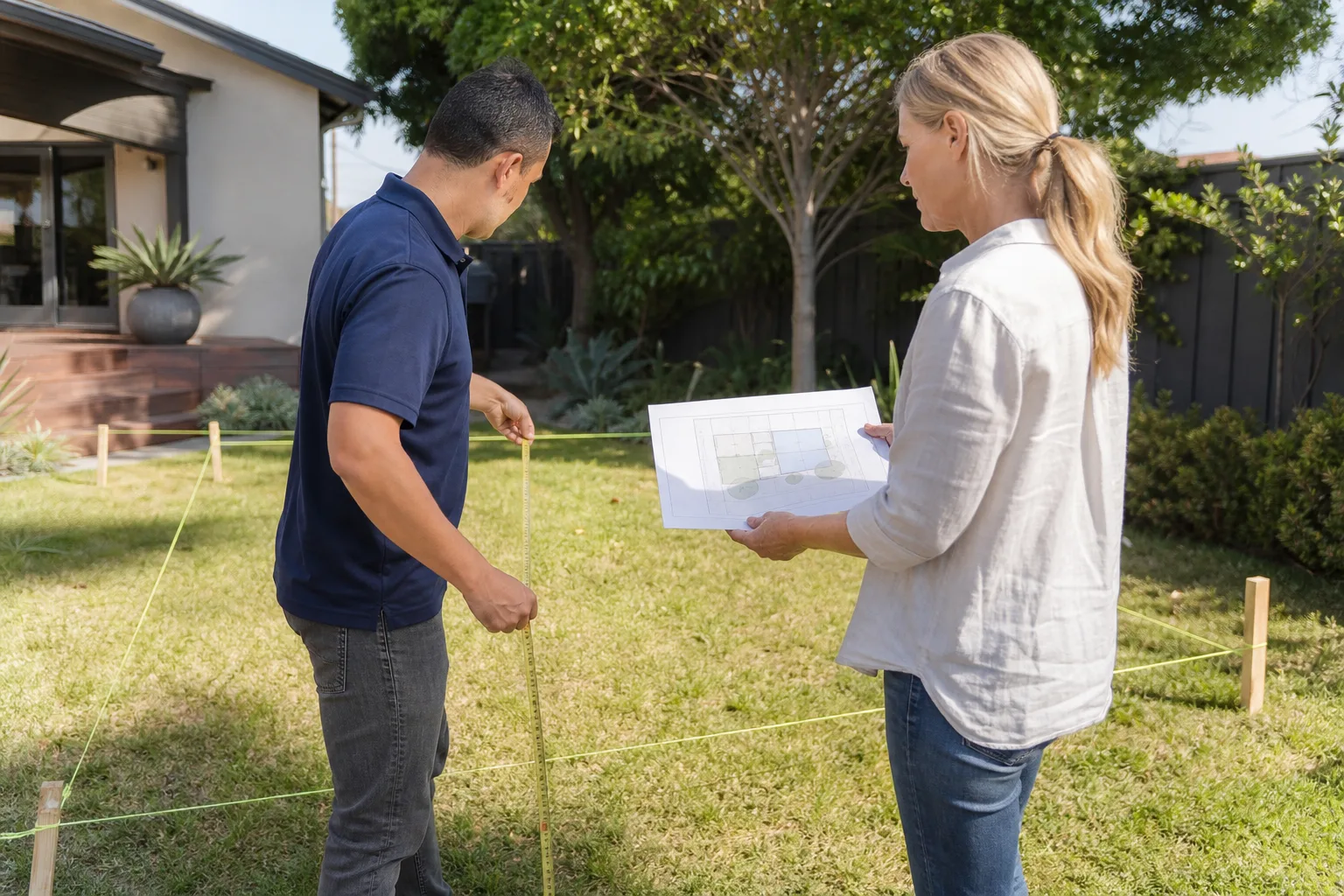
What a San Diego homeowner can safely check on their own: walk the pad with a four-foot level, look for standing water after rain, and note which breaker services the shed. If the issue is a tripping breaker or a door that sticks, those are symptoms worth diagnosing. Fixing them is a different job. Compacting soil properly requires plate compactors and knowing what’s underneath: in San Diego that can mean utility lines, irrigation, or old abandoned pipe. Electrical rough-in is genuinely dangerous. Trenching to code depth, pulling the right gauge wire, and landing it in a properly bonded panel is not a weekend project. A bad connection inside a wall is a fire hazard you won’t see until it’s too late. Tuff Shed won’t void your warranty for a bad pad, but your homeowner’s insurance may ask questions if unpermitted electrical work causes a loss.
If you want an honest read on whether your setup can be salvaged or needs to be redone, call (619) 376-2760. We’ll send someone out to look, give you a written price, and tell you straight if the existing prep is fine. Russ Delmar has walked enough San Diego lots to tell you in ten minutes whether you’re fixing a corner or rebuilding a base.
FAQs
A properly compacted gravel pad under a Tuff Shed in San Diego typically lasts 15 to 20 years before needing re-leveling, while a reinforced concrete slab with good drainage can last 30 years or more. The variables are drainage, soil movement, and whether the original install was actually compacted in lifts. If you’re seeing settling in year three, it wasn’t done right. Call (619) 376-2760 for a free site assessment and an exact quote.
Sometimes yes, sometimes no. A corner that’s settled less than an inch can often be lifted with slab jacking or shimmed with steel plates, but a slab with spreading cracks or a gravel pad that’s eroded underneath usually needs full replacement. We’ll tell you which one you have, in writing, before you spend anything.
Most San Diego Tuff Shed site prep jobs take two to four working days from excavation to a finished, inspected pad and rough-in. Permitting with the City of San Diego or the County adds one to three weeks depending on your jurisdiction and whether we’re trenching through a right-of-way. The price we quote includes that timeline.
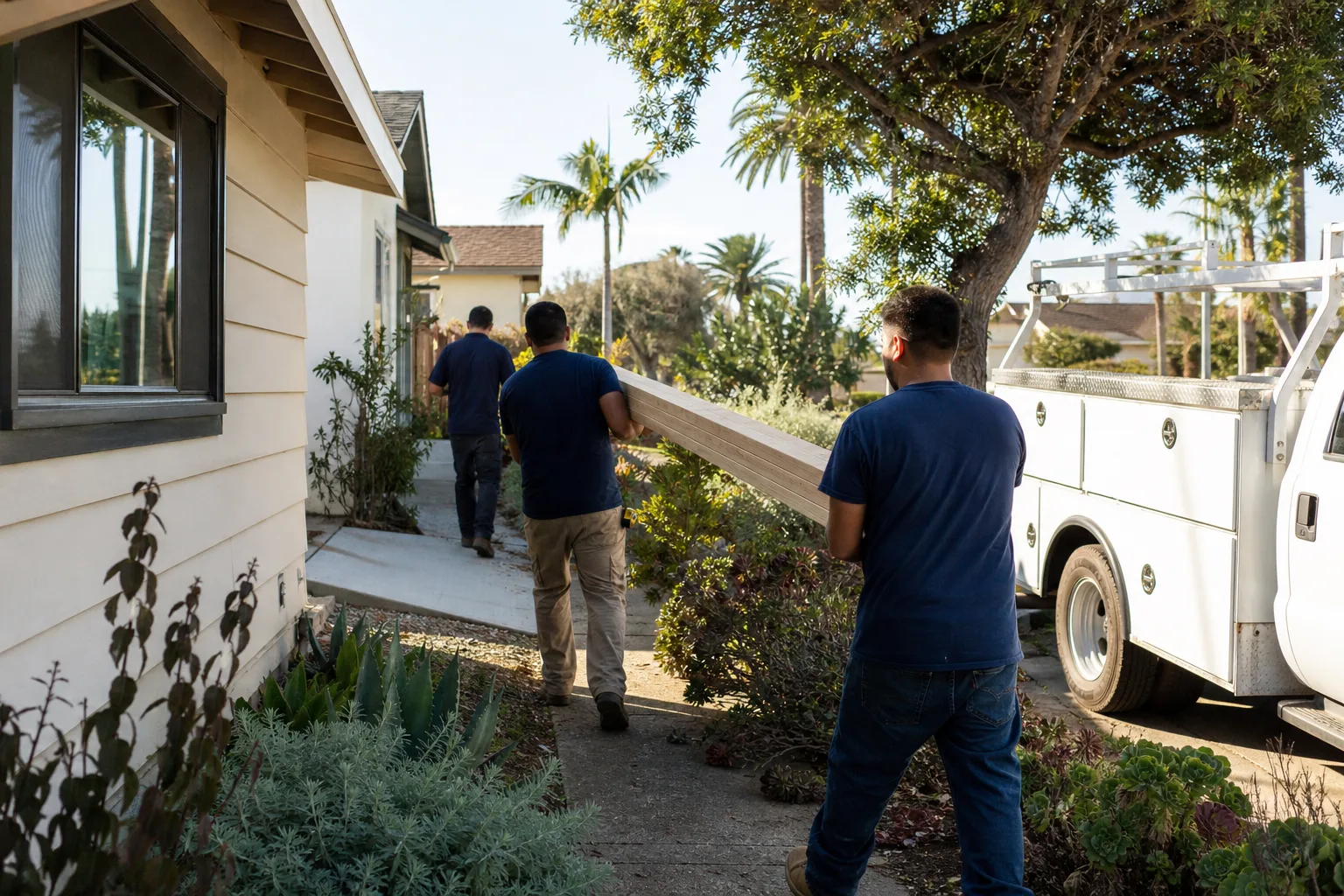
Yes. Our San Diego trucks carry standard rough-in components: Schedule 40 conduit, outdoor-rated subpanels, GFCI breakers, vapor barrier, and the rebar and form hardware we use on most pads. Odd lot conditions or custom panel sizes may need a supply-house run, which we build into the schedule before we start.
Tell me what you’re hoping to build, and I’ll tell you what it actually takes – cost, timeline, and all the permit steps – before you spend a dime. Call (619) 376-2760 for your free site prep and utilities estimate.
Written by Russ Delmar, Owner, Lodgewick ADU San Diego at Lodgewick ADU San Diego, serving San Diego and nearby areas.