James Hardie Garage Conversion ADU: The San Diego Owner’s Guide
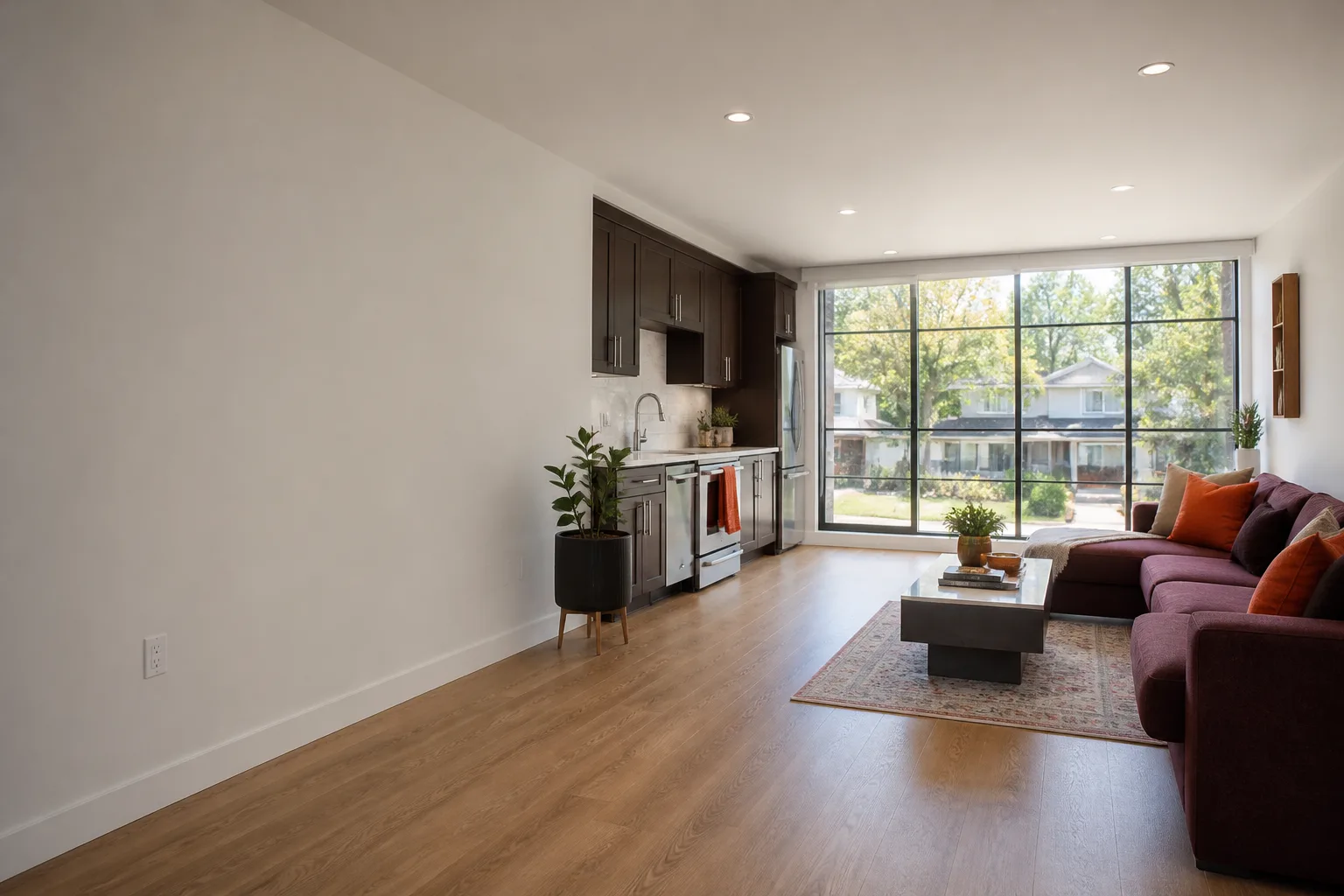
If you’re converting a garage into a livable ADU in San Diego and the existing siding, trim, or sheathing carries the James Hardie name, we stock and install the replacement materials and components most often needed: HardiePlank lap siding, HardiePanel vertical siding, HardieTrim boards, and the flashing, fasteners, and weather barriers that go behind them. A typical James Hardie-compatible garage conversion in San Diego runs $85,000 to $145,000 all-in, with the Hardie siding and envelope work accounting for roughly $9,000 to $18,000 depending on garage size and how much original framing can stay. Most San Diego homeowners discover a problem the same way: a soft spot near the bottom course, cracked boards along the old garage door opening, or water stains spreading across the ceiling after the first real winter rain, because water got behind the siding years ago and nobody caught it until the conversion was underway.
We’re an independent San Diego ADU contractor, not a James Hardie dealer or affiliate. That means we recommend what actually works for your building, not what a single brand wants pushed. We’ve done this long enough in San Diego to know which Hardie products hold up in coastal salt air, which fail early when installed wrong, and what a proper repair or replacement should cost before we open up the wall.
Which James Hardie Models This Applies To
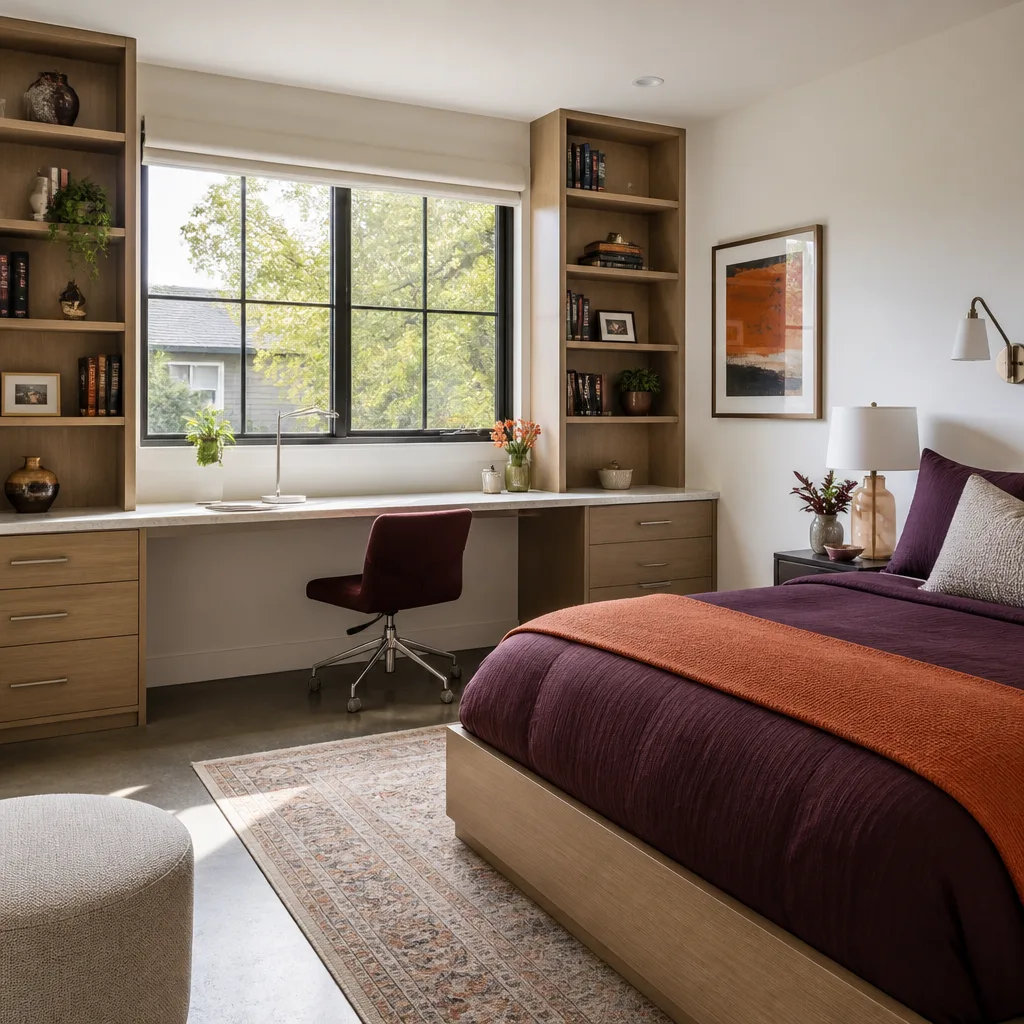
Most garage conversions in San Diego involve garages built anywhere from the 1950s through the early 2000s. The original siding on those buildings is rarely James Hardie, because fiber cement wasn’t common on San Diego garage structures until the 1990s. What we see far more often is a previous owner or contractor having added James Hardie siding or trim during a remodel, or the new conversion itself spec’d with Hardie materials to satisfy fire code and HOA design rules.
The three products that dominate San Diego garage conversions are HardiePlank HZ5 lap siding (5/16 inch thick, 7 1/4 inch exposure on standard lap), HardiePanel HZ5 vertical siding (4×8, 4×9, and 4×10 sheets), and HardieTrim HZ10 boards (smooth, Texture, or Woodgrain, in widths from 1×4 up to 1×12). The compatibility gotcha most San Diego homeowners run into: HardieTrim by itself is not rated as a structural corner or load-bearing element. It’s rated for non-structural trim, fascia, and rake applications when installed over code-compliant framing and sheathing. If your conversion plan calls for HardieTrim to replace the old garage door header cap, the framing behind it has to be inspected first. We’ve opened up garages in North Park where the header was a single unsupported 2×6 and the homeowner’s plan assumed the trim would carry the load. It won’t, and no inspector in San Diego will sign off on it.
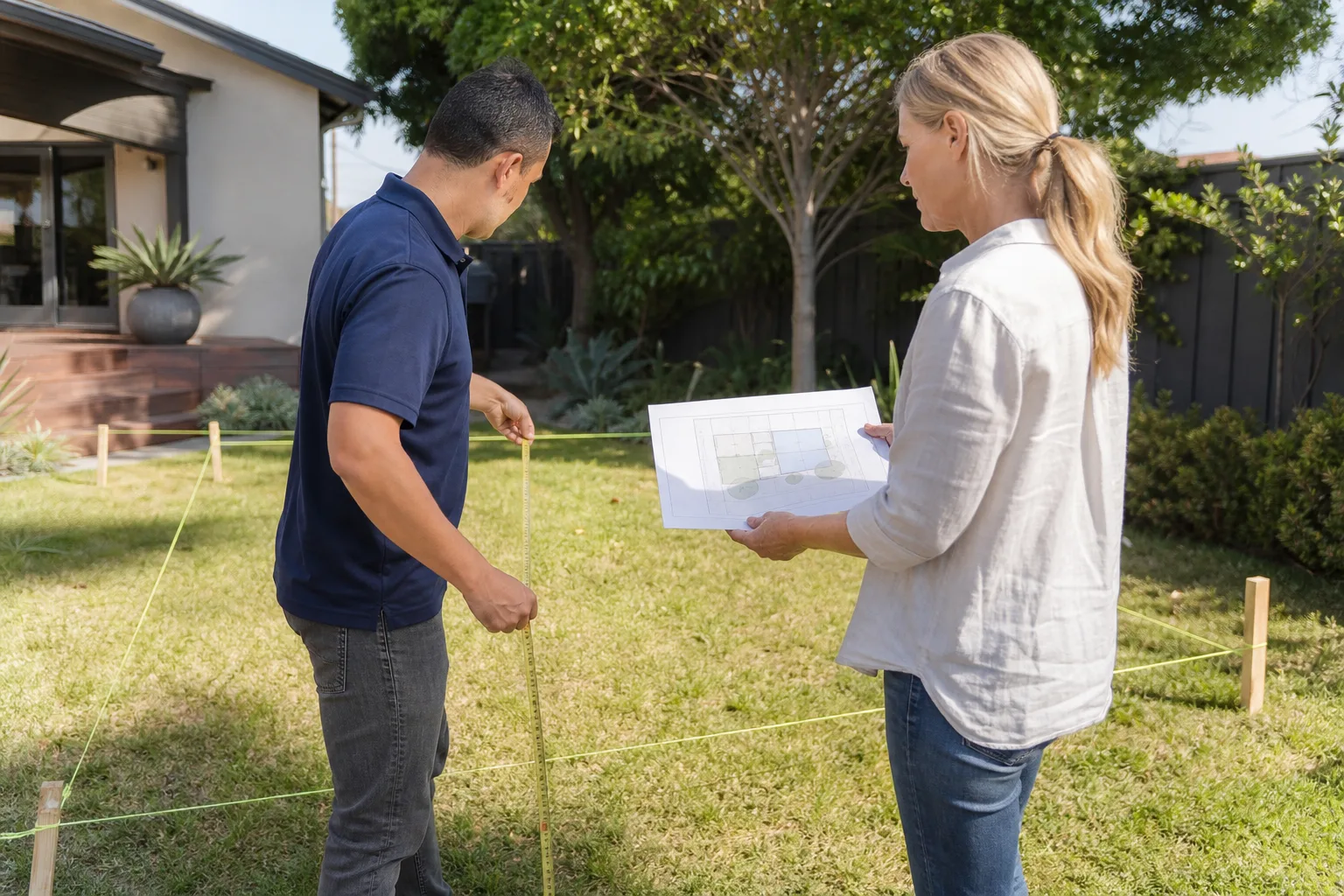
When you call us about a James Hardie-compatible garage conversion, Russ Delmar and the crew will ask for measurements and photos of the existing boards, the stamp or label location (usually printed on the back or edge of the board), and the year the garage was built or last re-sided. That tells us whether you have HZ5 (for zones 1 through 5, which covers inland San Diego County) or HZ10 (for the coastal fog belt where we see more moisture exposure near Point Loma, Ocean Beach, and La Jolla). The wrong board in the wrong zone voids the James Hardie warranty, which is worth knowing before you buy anything.
On the OEM-versus-aftermarket decision: James Hardie’s own fasteners, flashing, and joint treatment systems are reliably spec’d and easy for inspectors to verify. There are quality aftermarket equivalents for flashing tape and paint-grade caulk, and we use them where they save real money without cutting corners. But for the boards themselves, we don’t substitute. The fiber cement formulation, edge geometry, and pre-finished ColorPlus coatings are specific to James Hardie, and mixing an unknown aftermarket board into a Hardie system creates uneven expansion rates and paint adhesion failures that show up within two or three San Diego summers.
Signs Your James Hardie Garage Conversion ADU Is Failing
Here’s what we actually find on failed or failing garage conversion envelope in San Diego, and what each symptom usually means underneath:
- Cracking or crumbling along the bottom course of siding. This is nearly always ground-to-siding clearance failure. Hardie requires a minimum 6 inches from grade to the bottom edge of siding. When a San Diego garage slab was poured at or near grade, or when a previous owner poured a new patio or walkway against the wall, water wicks behind the board and the fiber cement swells, then crumbles. The board isn’t defective. The clearance is wrong.
- Boards bowing or popping nails near the old garage door opening. The original garage door header and jambs move at a different rate than the rest of the wall, especially in San Diego’s hot-dry summer to cool-damp winter cycle. If the Hardie boards were nailed too close to the edge or the framing behind them is undersized, you’ll see nails push out and boards cup at the corners. This is also a common spot where previous contractors skipped the required clearance gap at butt joints.
- Water stains on the interior ceiling or walls after rain. Water is getting past the envelope. On a garage conversion, the prime suspects are the roof-to-wall flashing, the old garage door threshold area, or penetrations like vents and exterior outlets that were cut into the Hardie after original installation. Hardie itself is moisture-resistant, not waterproof. The waterproofing comes from the weather barrier, flashing, and joint treatment. When those were skipped, the Hardie gets blamed but the system failed.
- Paint peeling in sheets, not chips, within two to three years. San Diego UV breaks down paint on any siding, but premature sheet peeling on pre-finished ColorPlus Hardie usually points to a bad batch of install: boards cut on site and installed with raw edges exposed, or non-Hardie touch-up paint used over the factory finish. The backing primer and topcoat delaminate from the board surface. It’s a warranty and installation problem, not normal wear.
- Mold or dark staining inside the wall cavity near the plate. We see this when a garage conversion gets Hardie installed over the old garage drywall or existing sheathing without addressing the original vapor barrier, or without flashing the transition where the garage slab meets the stem wall. Condensation and capillary wicking trap moisture in the cavity. By the time you see mold, the studs and sill plate may be compromised and need replacement, not just cleaning.
Replacement Cost & What’s Included
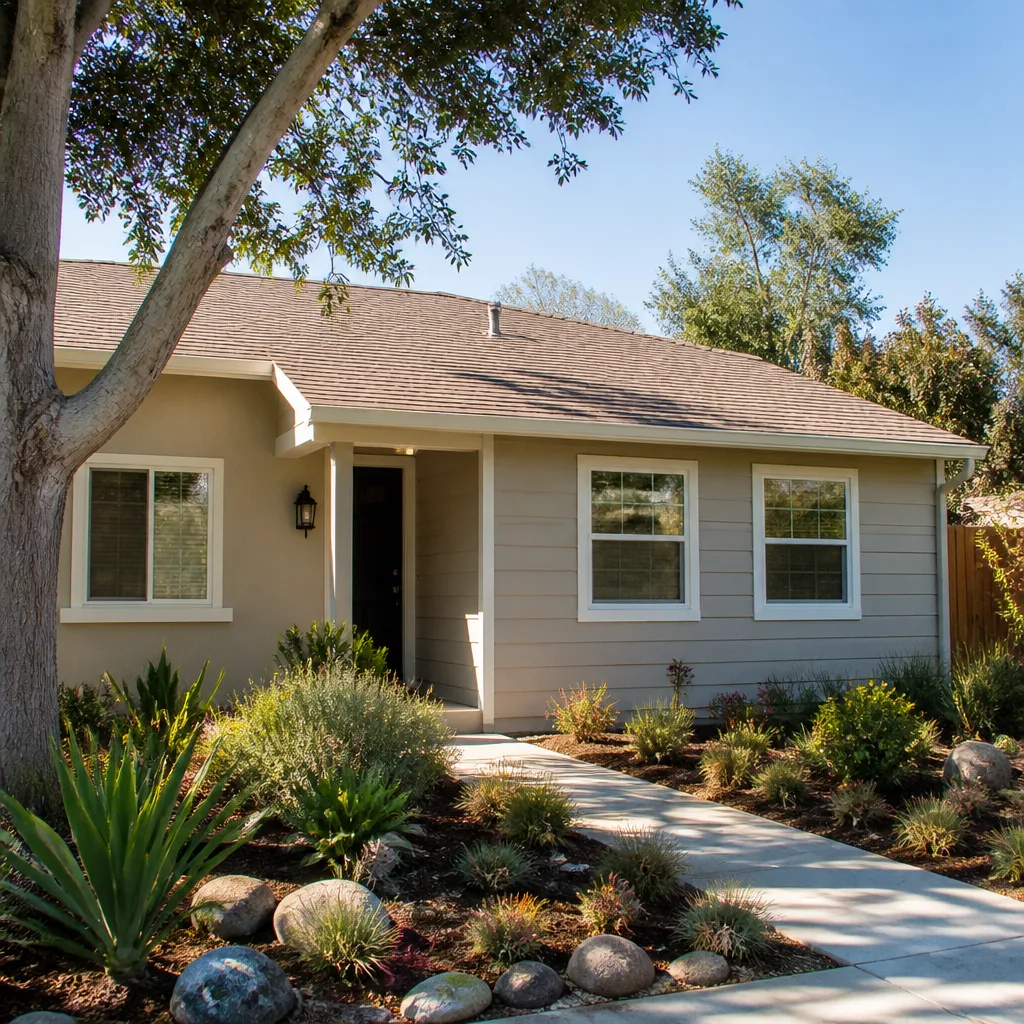
For a typical 20×20 single-car garage in San Diego being converted to an ADU, here’s the honest cost picture for the James Hardie envelope work, installed:
- Siding replacement only (remove and replace HardiePlank on two walls): $4,800 to $7,500, including disposal, new nails, flashing, and joint treatment
- Full envelope re-clad (all four walls, HardiePlank or HardiePanel, with new weather barrier, flashing, and trim): $9,000 to $14,000
- HardieTrim replacement at corners, door, and window openings only: $1,800 to $3,200
- Remediation after water intrusion (framing repair, sill plate replacement, mold abatement, then re-clad): Add $4,000 to $9,000 depending on what the framing inspection finds
Every quote from Lodgewick ADU San Diego includes the written price before any work starts, a defined arrival window, and a line-item breakdown of materials, labor, and permit fees. You’ll see exactly what the Hardie boards cost per square foot installed, what the disposal and hauling fee is, and what the city of San Diego’s plan check and inspection charges will run. No change orders at the door. If the inspector finds rotten framing behind the siding, we stop and show you what we found, with a written cost to fix it before we proceed. The Kingswell Guarantee includes a free return visit within 365 days if any part of the work fails. We put that in writing on every project.
DIY or Call Us?
You can remove and replace individual HardiePlank boards if the framing behind them is sound and the problem is cosmetic. But be direct about what you’re getting into: Hardie boards weigh about 2.3 pounds per square foot, so a 12-foot plank is roughly 30 pounds. Cutting fiber cement produces silica dust that requires a respirator and proper containment, not a standard dust mask. The nailing pattern matters more than on wood or vinyl; Hardie requires specific fastener spacing, penetration depth, and edge distance, and when those are wrong, the board cracks or the warranty dies on arrival.
Where DIY goes genuinely wrong on a San Diego garage conversion is water management. The boards are the visible layer. The part that keeps your converted living space dry is the weather barrier, the flashing at the roof-to-wall junction, the z-flashing over horizontal trim, the weep screed at the bottom, and the joint treatment between boards. Missing any one of those, even on a small patch job, turns a cosmetic repair into a water damage claim six months later. If the board failure was caused by water, not impact, call us first at (619) 376-2760. We’ll find where the water is getting in. That diagnosis visit costs you less than redoing the bottom four feet of siding twice.
FAQs
James Hardie fiber cement siding, when installed to spec and maintained, carries a 30-year limited non-prorated warranty on the boards and a 15-year warranty on ColorPlus finish. In coastal San Diego, where salt air and fog cycles apply, we tell homeowners to plan for realistically 25 to 30 years from the boards, with repainting (if you chose primed, not ColorPlus) needed every 7 to 10 years. What shortens lifespan here isn’t the Hardie. It’s installation shortcuts, poor ground clearance, and skipped flashing. Call (619) 376-2760 if you want an honest condition assessment before you spend on a full re-clad. Estimates are free.
Yes, if the damage is limited to individual boards and the sheathing, weather barrier, and framing behind them are dry and sound. A cracked or chipped board can be cut out and swapped for a new one with the same profile and exposure. The repair usually costs $400 to $900 per board in San Diego when it’s a like-for-like swap on a standard wall. What can’t be repaired is systemic failure: water behind the entire envelope, widespread nail pops, delaminating finish across multiple boards, or improper ground clearance on the whole wall. At that point, patching individual boards is throwing good money at a system that will keep failing. Call us for a free estimate and we’ll tell you which situation you’re in, with the cost difference laid out in writing.
For a standard single-car garage in San Diego, removing and replacing the Hardie siding and trim on all four walls takes our crew three to five working days, assuming the framing inspection passes and weather cooperates. A two-car garage with a complex roofline or extensive HardiePanel vertical installation can run five to eight days. The full garage conversion, including framing, insulation, electrical, plumbing, drywall, and finish work, typically spans 10 to 16 weeks depending on permit turnaround and inspection scheduling with the city of San Diego.
We keep a standard inventory of HardiePlank HZ5 lap in 12-foot lengths, HardiePanel HZ5 4×8 sheets, HardieTrim HZ10 in the most common widths, Hardie fasteners, flashing tape, and joint treatments on hand for immediate repairs and emergency patches. Specialty orders, like pre-finished ColorPlus boards in specific San Diego HOA-approved colors or HardiePanel in 4×10, typically arrive from our materials supplier within three to five business days. We also work with Abodu, Cover, and Dvele prefab ADU systems when a client wants a factory-built unit finished with James Hardie siding on site, so we know how those brands’ panels and Hardie materials interface on a San Diego lot.
Tell me what you’re hoping to build, and I’ll tell you what it actually takes – cost, timeline, and all the permit steps – before you spend a dime. Call Lodgewick ADU San Diego at (619) 376-2760 for a free estimate on your James Hardie garage conversion ADU. A live person answers, and we’ll schedule a walkthrough at your San Diego property.
Written by Russ Delmar, Owner, Lodgewick ADU San Diego at Lodgewick ADU San Diego, serving San Diego and nearby areas.