Dvele Site Prep & Utilities: The San Diego Owner’s Guide
If your Dvele home is sitting on a lot that wasn’t properly prepared for its foundation, its utility runs, or its drainage, we handle the full scope of site prep and utility work that gets a Dvele placed and connected correctly in San Diego. Most Dvele site prep and utility packages in San Diego run between $18,000 and $55,000, depending on what your lot needs before the modules ever touch the ground. That’s a wide range on purpose: a flat lot in Clairemont with existing sewer lateral access is a very different job from a sloped parcel in La Mesa that needs retaining work, trenching through granite, and a new electrical service drop. Owners usually discover site prep is failing when water pools against the foundation after rain, when SDG&E won’t energize the panel because the trench depth is wrong, or when the city inspector flags drainage before a Dvele module can be bolted to its piers.
Which Dvele Models This Applies To
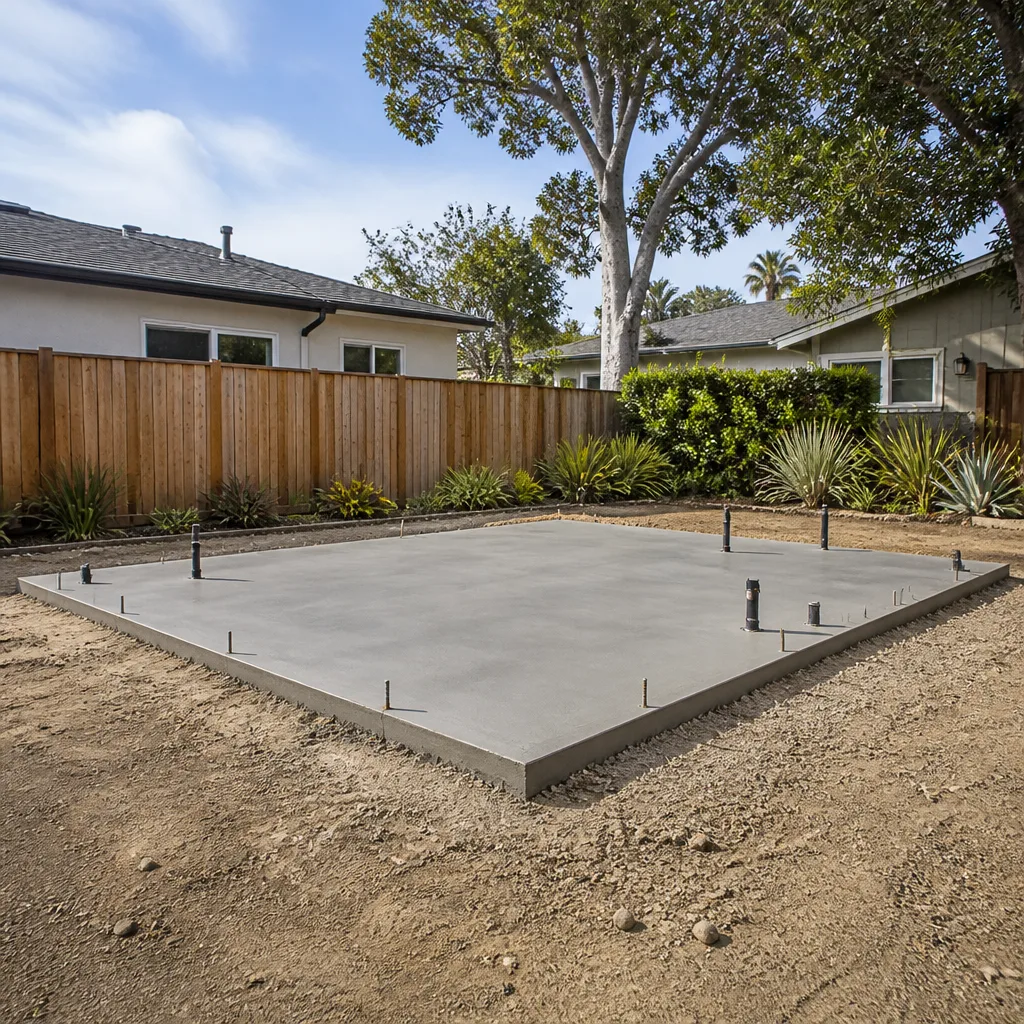
Site prep and utility work isn’t tied to one Dvele floor plan. It’s the prerequisite layer under every Dvele model that ships to a San Diego lot, whether you’re placing a single-module studio or a multi-module three-bedroom. The scope depends on what your specific site demands, not which Dvele series you bought.
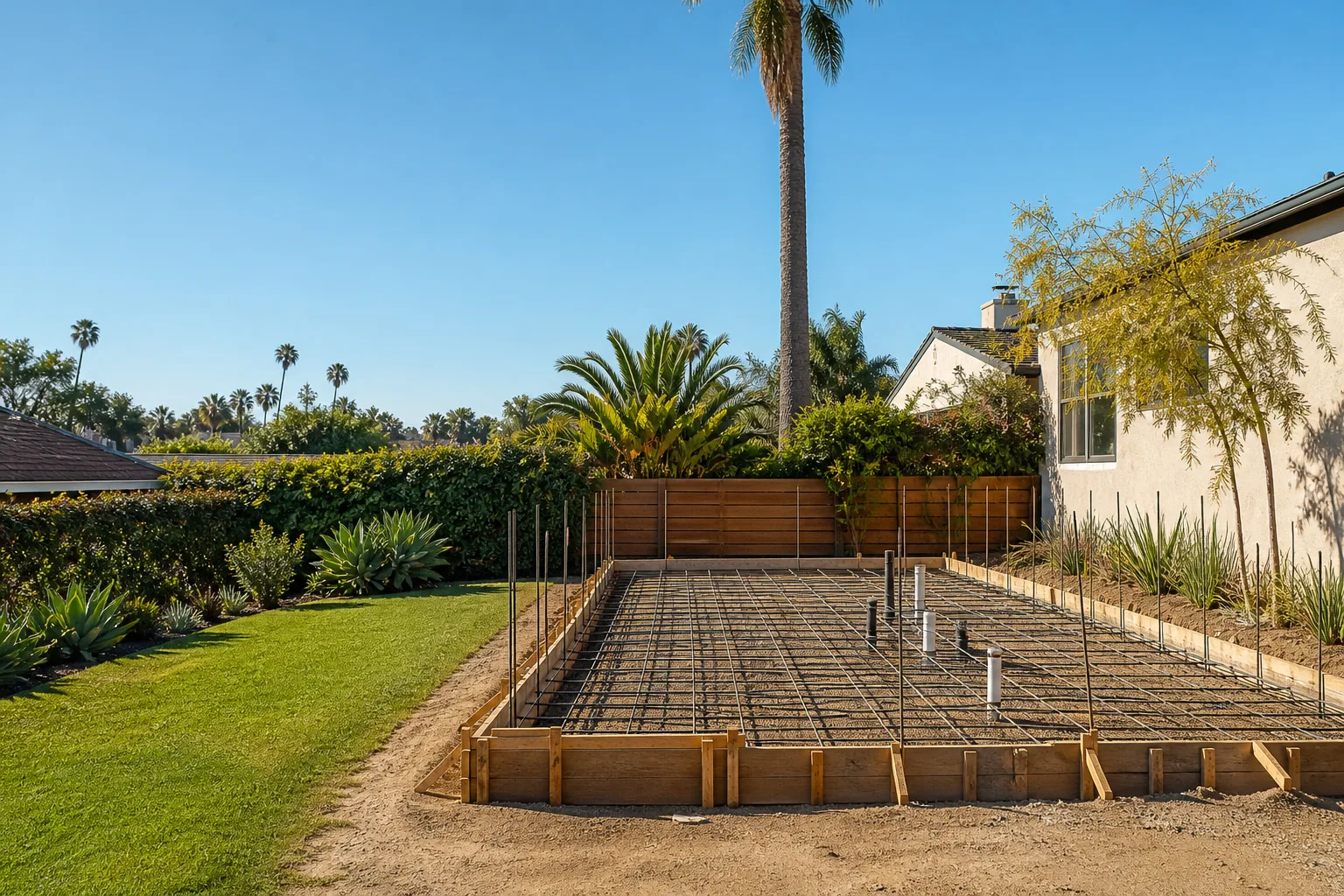
The practical difference shows up in three places. Foundation type: Dvele’s system is designed to sit on a pier-and-grade-beam system, a raised stem-wall, or a full slab, and your geotechnical report dictates which one your lot needs. Utility capacity: a two-module Dvele with an all-electric kitchen, heat pump, and EV charger pulls a different electrical load than a smaller module, and your trenching and panel work has to match what the modules will actually draw once energized. And drainage: San Diego’s building code requires positive drainage away from any foundation, which on a flat lot often means importing fill and regrading before the foundation formwork ever starts.
Here’s the compatibility gotcha we see regularly: Dvele’s factory specs assume a level, compacted building pad within a tight tolerance. If your pad is off by more than an inch across the footprint, shimming gets ugly and the module seams suffer. We’ve re-graded several San Diego lots where a previous contractor poured a “close enough” pad, and the Dvele installation crew flagged it immediately.
Lodgewick ADU San Diego is an independent service provider. We’re not affiliated with Dvele, but we’ve done site prep for their modules and know what their installation teams check before they sign off on a delivery.
Signs Your Dvele Site Prep & Utilities Is Failing
- Water pooling against the foundation after a normal San Diego rain. This usually means the finished grade wasn’t sloped away from the pad, or the drainage swale has settled. Standing water against a Dvele foundation accelerates concrete spalling and invites moisture into the module’s underside.
- The utility trench has sunk, leaving a visible dip across the yard. Trenches settle when backfill wasn’t compacted in lifts. A sunken trench can strain buried conduit and pipe joints, and it’s a trip hazard. We’ve seen trench settlement pull a sewer lateral out of grade, reversing the flow on a North Park build.
- SDG&E or the city has red-tagged your panel or service drop. This typically means the trench depth, conduit fill, or grounding wasn’t done to current code. The utility won’t energize until it’s corrected, and every week of delay is a week your Dvele can’t be occupied.
- The foundation piers or grade beams show cracking within the first two years. In San Diego’s clay-heavy neighborhoods like Rolando or parts of Chula Vista, expansive soil expands and contracts with moisture. If the pier depth was cut short or the soil wasn’t properly evaluated, that movement transfers straight into the structure.
- You hear water running underground when nothing is in use. That’s often a leaking water service line in a hand-dug or poorly bedded trench. On a Dvele lot, an undetected slab-side leak will eventually undermine the very ground your foundation is bearing on.
Replacement Cost & What’s Included
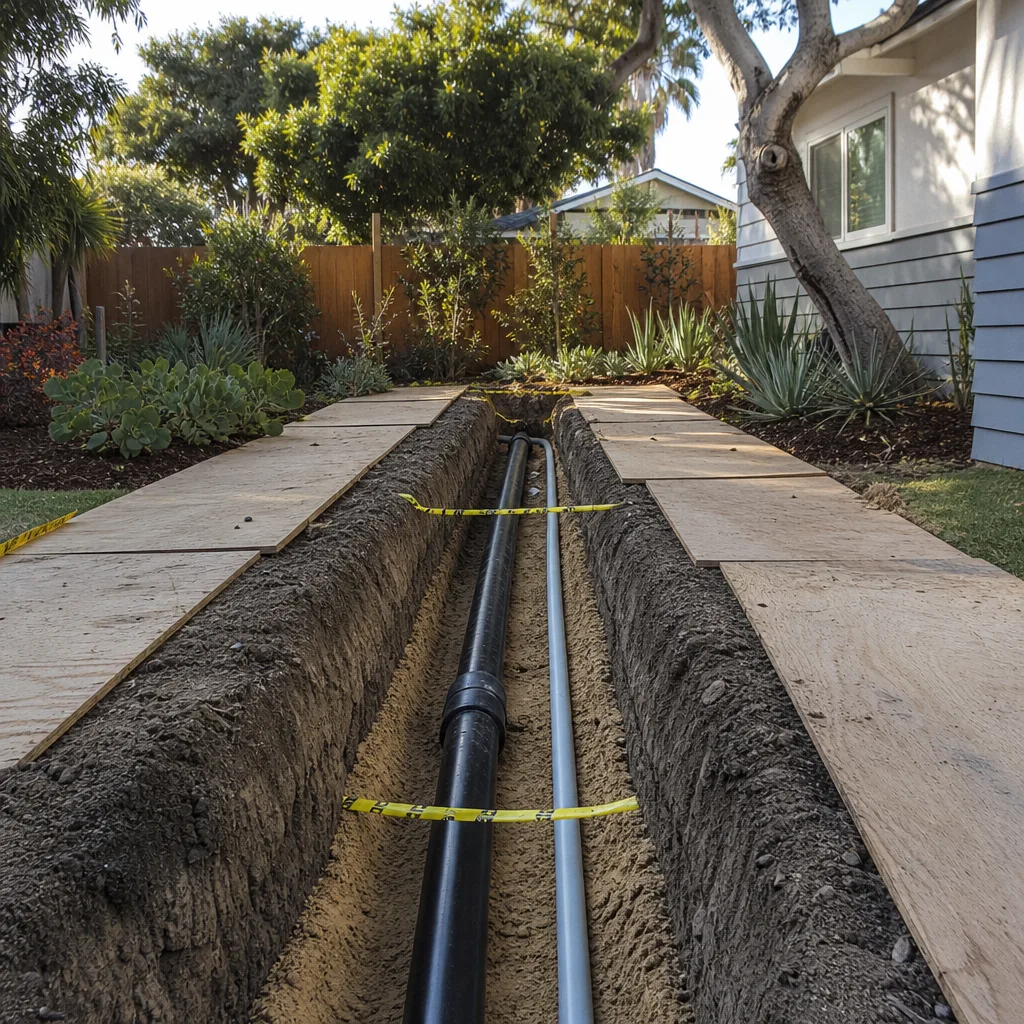
In San Diego, site prep and utility work for a Dvele placement falls into three rough buckets. A straightforward utility stub-up on a mostly level lot with existing sewer and water access runs $18,000 to $28,000. A lot that needs moderate regrading, new trenching for all utilities, and a stem-wall foundation typically lands between $30,000 and $42,000. And a difficult site (steep slope, retaining walls, rock excavation, long utility runs from the street) will push $45,000 to $55,000 or more.
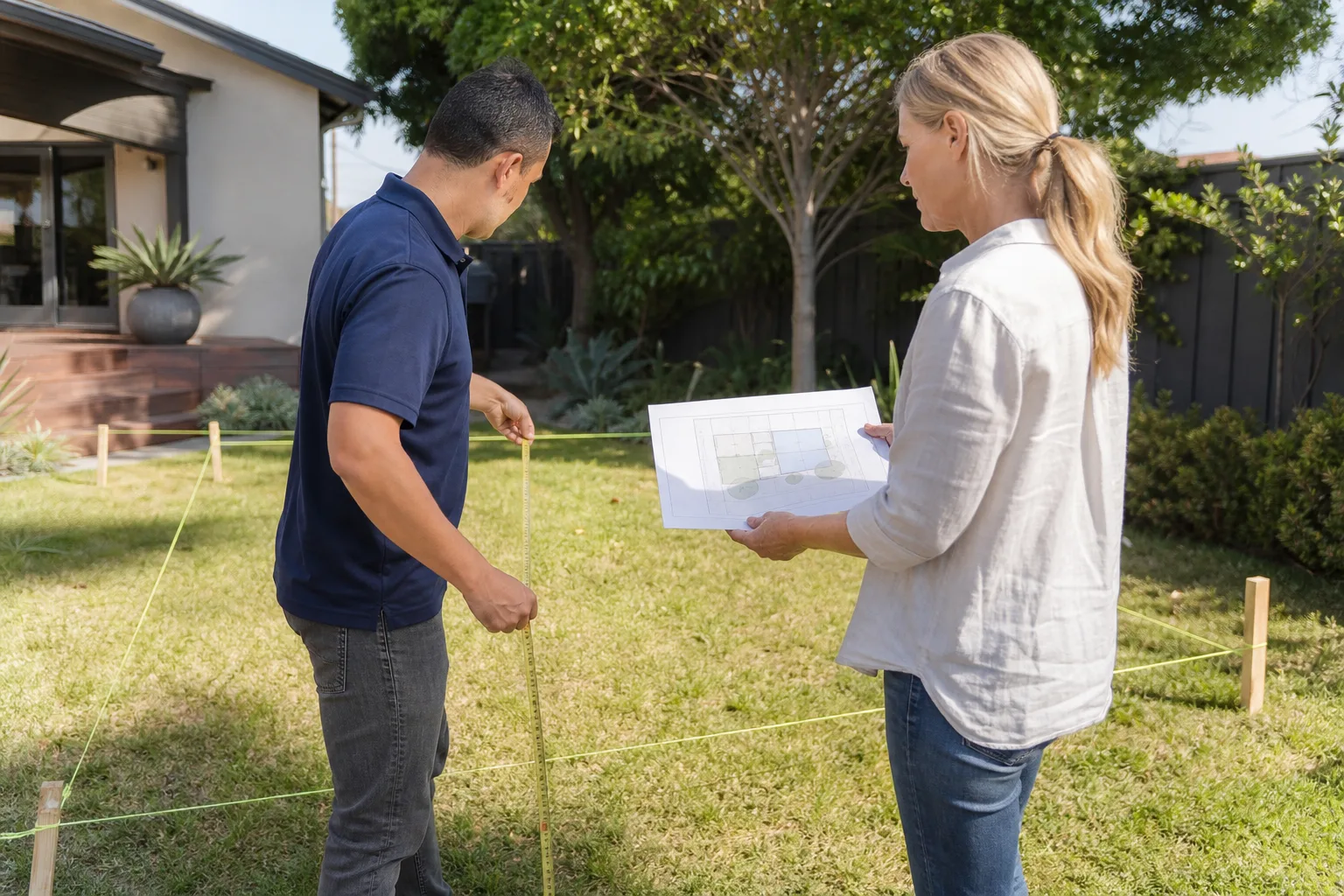
What’s included in our written price: site survey and layout, grading and compaction, foundation work per the Dvele spec, all trenching and utility runs (water, sewer, electrical conduit), backfill and compaction in lifts, and final grade for drainage. Your written price comes before any work starts, and it doesn’t change at the door. Every job carries the 365-Day Done Right Promise: if the work isn’t right, we come back and make it right, in writing, before we ever put a shovel in the ground.
DIY or Call Us?
Site prep and utility work is not a DIY field. Excavation, compaction, sewer lateral connection, and electrical trenching all carry real risk: a trench collapse can kill, a gas line strike is a genuine emergency, and a wrong sewer grade will fail inspection every time. Even checking your own site is limited: you can visually confirm your lot drains away from the foundation, and you can look for settlement dips along your utility trench. But anything beyond that needs a trained crew with the right equipment.
What we can tell you over the phone is whether your issue sounds like a compaction problem, a drainage problem, or a utility problem, and what that usually costs to fix in San Diego. Call (619) 376-2760 and we’ll walk the site with you before you spend a dime on fixes that don’t address the root cause.
FAQs
Done correctly, the site prep itself (grading, compaction, foundation) should last the life of the home; the utilities (water, sewer, electrical) are rated for 50 to 100 years depending on the material. The catch is that “done correctly” means compacted in lifts, bedded in proper fill, and backfilled without voids, shortcuts that are invisible after the job is done but show up in the first five years if skipped. We warranty our site prep and utility work through the 365-Day Done Right Promise, and we’ll come back free if anything fails within that guarantee period.
Most site prep failures are repairable in place. A settled trench can be re-excavated and recompacted, a drainage problem can be fixed with regrading or a French drain, and an improperly compacted pad can often be stabilized with pier reinforcement. Full re-excavation is rare. Call (619) 376-2760 and we’ll tell you exactly what your specific lot needs after a walkthrough.
A straightforward flat-lot site prep with utility stubs typically takes two to three weeks from mobilization to final inspection. A difficult site with retaining walls and rock work can run six to eight weeks. San Diego’s permit and inspection schedule, not the physical work, is usually what controls the timeline on the utility side.
We stock the common materials for San Diego Dvele site prep jobs: form boards, rebar, compaction gravel, schedule 40 conduit, and the standard plumbing and electrical fittings our crews use daily. Custom items like engineered retaining wall blocks or specialized piers may have a lead time, but we’ll put the delivery dates in your written price before we start. We also work with Abodu and Cover units, so if you’re comparing prefab approaches, we can talk about what each one demands from your site.
If your Dvele lot is showing signs of prep failure, or you’re planning a placement and want the site done right the first time, call (619) 376-2760. Tell me what you’re hoping to build, and I’ll tell you what it actually takes, cost, timeline, and all the permit steps, before you spend a dime.
Written by Russ Delmar, Owner, Lodgewick ADU San Diego at Lodgewick ADU San Diego, serving San Diego and nearby areas.