Cover Site Prep & Utilities: The San Diego Owner’s Guide
Site prep and utilities for a Cover unit in San Diego typically run $9,500 to $28,000 installed, depending on what’s already on your lot and how far the trenching has to go. We stock and install Cover-compatible foundation pads, electrical service runs, water line tie-ins, and sewer connections, and we can usually have a crew on-site within five to seven business days of your written estimate. Most owners discover a site prep problem when the prefab delivery date gets close and the ground still isn’t ready: a trench collapses, the old sewer lateral fails a pressure test, or the panel turns out to be too small for the unit’s load. If your Cover build is stalled on site work, or if a previous contractor left an open trench and a pile of unfilled permits, this page should get you unstuck.
Which Cover Models This Applies To
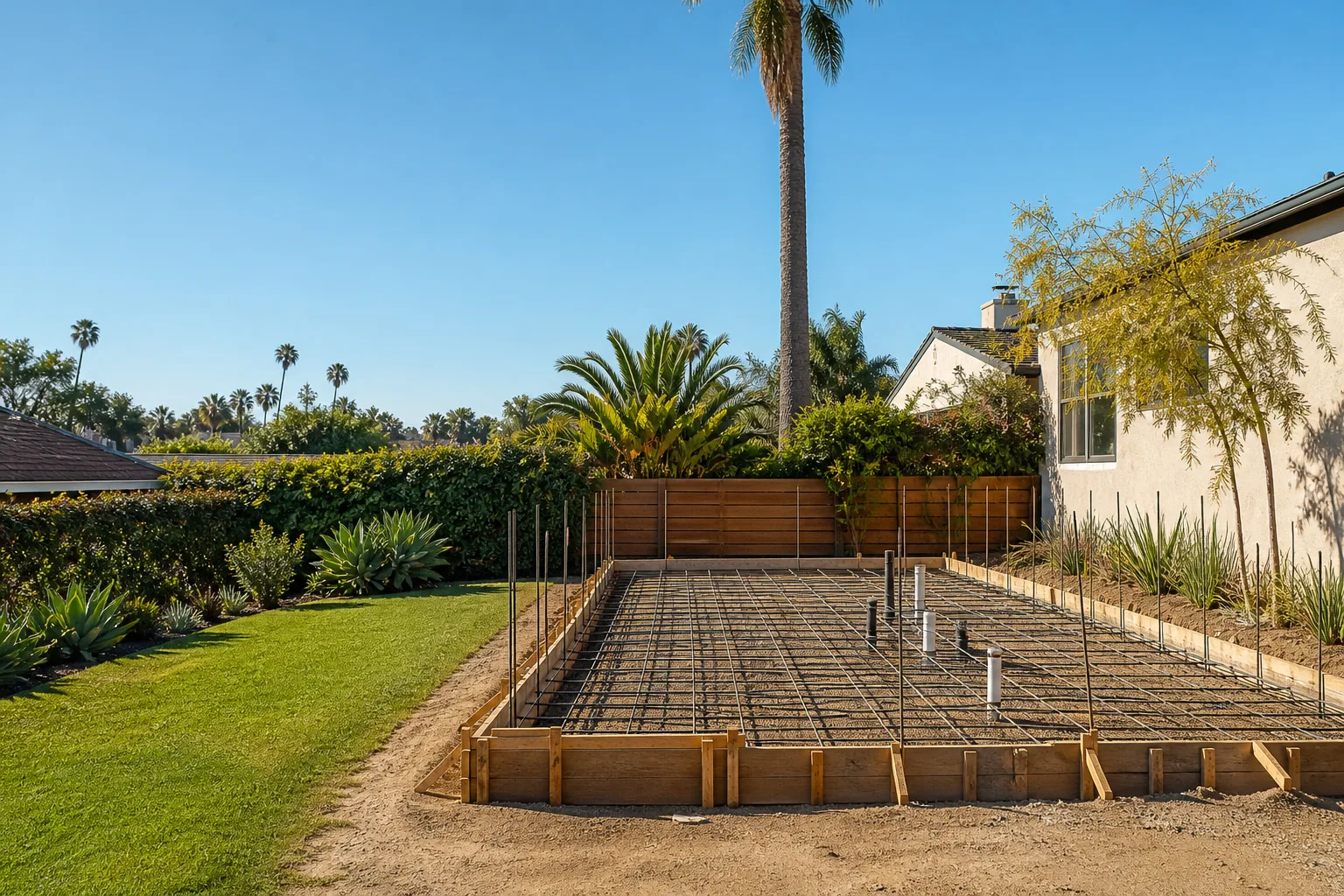
Cover builds panelized prefab units, not mobile homes or shed kits, so the site prep standard is closer to a conventional addition than a backyard shed. Our crews work on site prep for the Cover S (studio, roughly 400 to 600 square feet) and the Cover One and Two (one- and two-bedroom units that run between about 600 and 1,200 square feet). The compatibility gotcha most owners don’t see coming: Cover units sit on a treated-wood foundation system that demands a flatter pad than a typical concrete slab. The manufacturer’s spec calls for a level variation of no more than 1/8 inch over ten feet, which is tighter than a residential driveway slab and requires a laser-screed pour or a compacted-gravel-and-pier system that can be adjusted. If you’re not sure which pad your unit’s engineering drawings call for, check the site plan stamped with your Cover order number; the foundation detail page will list the exact pier spacing and the utility stub-out locations. We install both OEM-specified foundation details and quality aftermarket equivalents (pressure-treated piers, stainless steel connectors, and Schedule 40 conduit) when the Cover drawing is silent or when San Diego’s coastal moisture makes an upgrade sensible. Lodgewick ADU San Diego is an independent service provider and is not affiliated with Cover; we also carry parts and prep supplies for Abodu and Dvele units if you’re comparing prefab brands.
Signs Your Cover Site Prep & Utilities Is Failing
- Water pooling around the foundation pad after rain. This usually means the pad was poured without enough slope for drainage, or the perimeter gravel was skipped. In San Diego’s winter storm months, standing water at the pad edge will wick into untreated sill plates and start rot within two seasons.
- The trench for water or sewer lines has collapsed or filled with mud. Sandy soil in places like Clairemont and Mira Mesa doesn’t hold a vertical cut for long without shoring. A collapsed trench means the line was never bedded properly, and backfilling over mud guarantees a future low spot that traps waste.
- A breaker trips whenever the Cover unit’s mini-split or water heater kicks on. The panel or the feeder wire is undersized for the unit’s actual load. We see this when someone reused an old garage subpanel without checking the Cover electrical schedule, which typically calls for a 100-amp service for the one-bedroom units.
- The sewer lateral fails a pressure test or smells like sewage near the cleanout. In older San Diego neighborhoods like North Park and Normal Heights, the original clay lateral under the yard may be cracked from decades of ground movement. A failing lateral won’t pass city inspection, no matter how nice the prefab unit is.
- City inspectors won’t sign off on the rough-in. Missing trench inspections, unmarked utility locates, or improper backfill are the three most common reasons a San Diego site prep job stalls at the permitting stage. We fix stalled permits by opening the trench back up and bringing the work to current code.
Replacement Cost & What’s Included
For a San Diego Cover site prep and utility tie-in, most jobs fall between $9,500 and $28,000 installed. On the low end is a flat lot with the gas, water, and sewer stubs already near the pad location; on the high end is a sloped Encinitas hillside or a Clairemont lot with a sewer lateral that hasn’t been touched since the 1960s. The line items are honest and separate: excavation and grading, foundation pad or pier system, trenching for water and sewer, electrical feeder and panel work, and final compaction and inspection. We give a written price before any dirt moves, and every quote names the permit fees, the schedule for rough-in and final inspections, and the exact days our crew will be there. The workmanship carries the Kingswell Guarantee in writing, which means if something fails within 365 days, we come back and fix it free. Russ Delmar reviews every San Diego site prep estimate personally before it goes out, because he’s seen too many homeowners handed a number on a handshake that turns into a change order by week two.
DIY or Call Us?
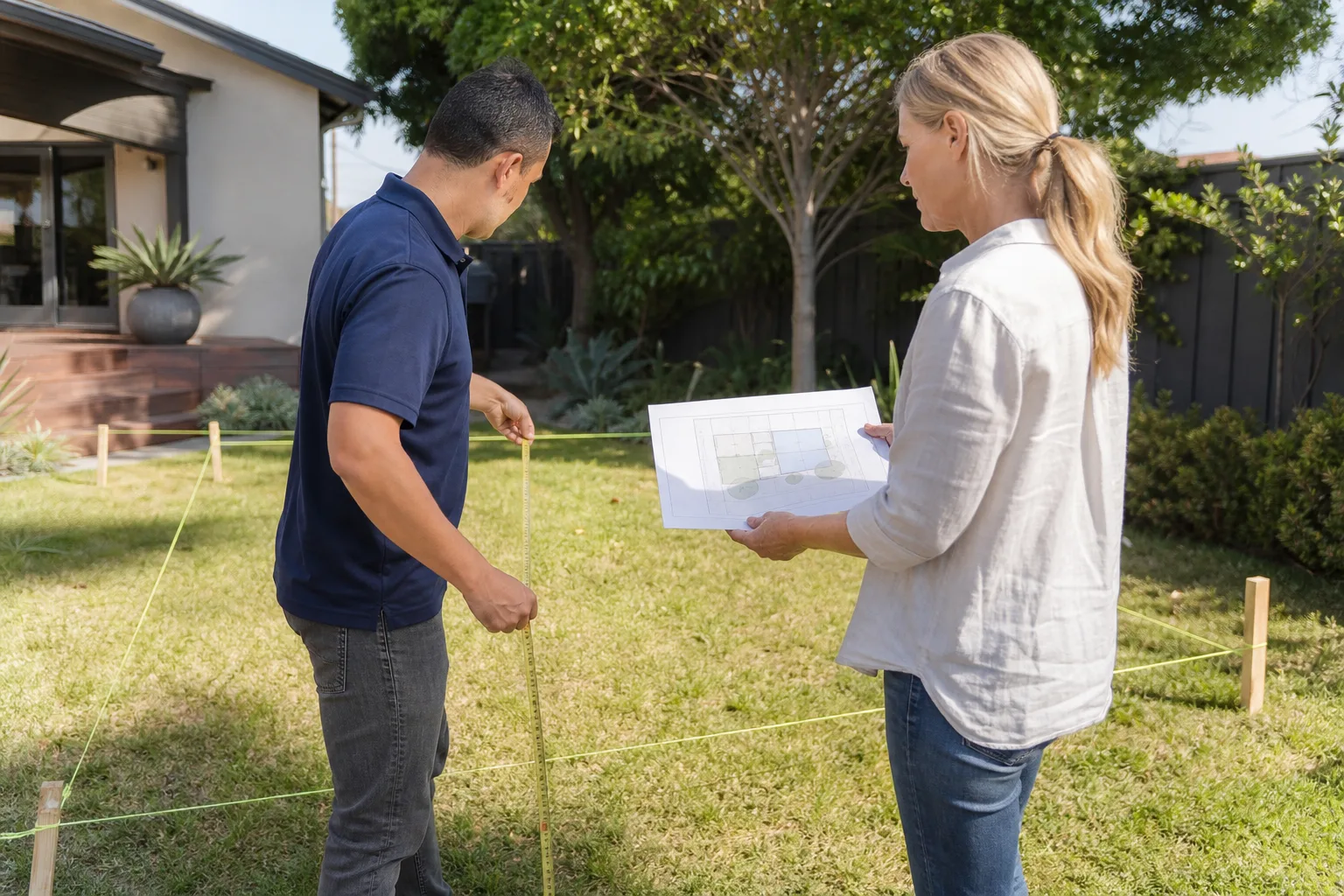
You can safely do the visual checks: look for pooling water, check whether the pad has a noticeable slope with a four-foot level, and note where the panel and the trench lines sit relative to the Cover stubs. What you should not do yourself is trench across your own yard. In San Diego, an underground electrical or gas line hit is not a hypothetical; it is the leading cause of site prep injuries and is exactly the kind of job that needs a utility locate, a trench inspection, and a licensed crew who knows the depth and separation rules in the San Diego municipal code. High-voltage feeder trenching and connecting a panel to the meter are not forgiving of guesswork. If the ground’s already open and the inspector is scheduled, or if a previous contractor left it all half-done, call (619) 376-2760 and we’ll walk it with you before we give a number.
FAQs
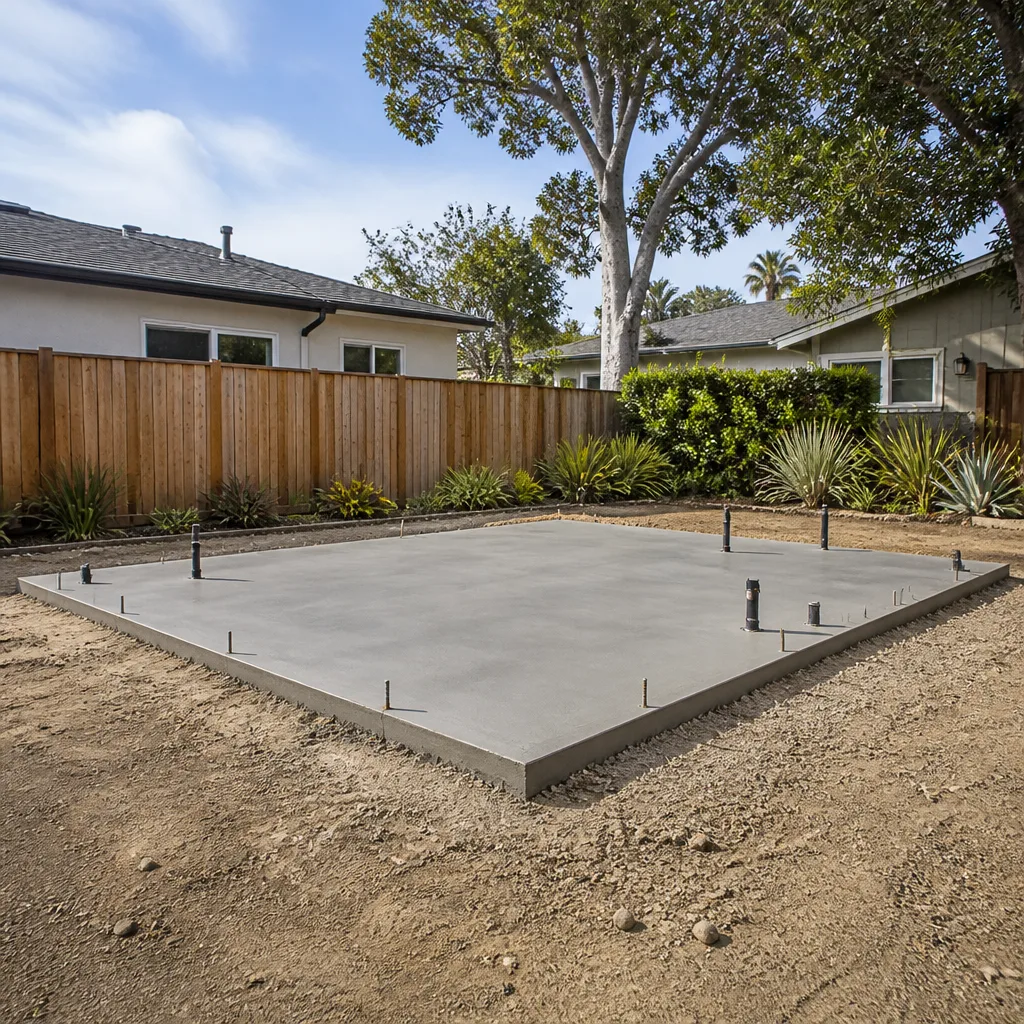
A properly built Cover foundation pad with a treated-wood pier system lasts 30 to 50 years in San Diego’s climate, while the water and sewer lines under it should last 40 or more if bedded correctly and protected from our clay-heavy, shifting soils. The weak points are untreated sill plates on a wet pad, which can rot in under five years, and shallow utility lines that get hit by future landscaping. Call (619) 376-2760 if you want us to check the pad and the lines before your Cover unit arrives.
Most site prep issues can be repaired without tearing everything out: a failing sewer lateral can be spot-repaired or lined, an uneven pad can be shimmed with adjustable steel piers, and an undersized electrical feeder can be pulled through existing conduit if it’s roomy enough. Full replacement is only needed when the pad has shifted beyond tolerance or the lines were installed without inspection in the first place. We’ll tell you which one you’re looking at after a single site walk, and the written estimate will show exactly what we’re keeping and what we’re replacing.
Most San Diego Cover site prep jobs are done in two to four weeks from the day we start digging, including city inspections and final compaction. That range assumes the permit is already issued and the utility companies have marked their lines. If you’re still in permitting, add two to six weeks for San Diego’s plan check turnaround depending on the neighborhood. You’ll get a date range in writing on every quote, and we call if the inspector moves us.
Yes, our San Diego crews carry pressure-treated piers, stainless connectors, Schedule 40 electrical conduit, and sewer and water fittings sized for Cover foundation details on the truck every day, so the parts we need for most stubs and pads are already in the truck when we arrive. For uncommon sizes or OEM-specified plates, we order from local San Diego suppliers and usually have them in hand within two business days. Call (619) 376-2760 with your Cover order number, and we’ll confirm what’s in stock before we schedule the walk.
Written by Russ Delmar, Owner, Lodgewick ADU San Diego at Lodgewick ADU San Diego, serving San Diego and nearby areas.