Tuff Shed New Detached ADU: The San Diego Owner’s Guide
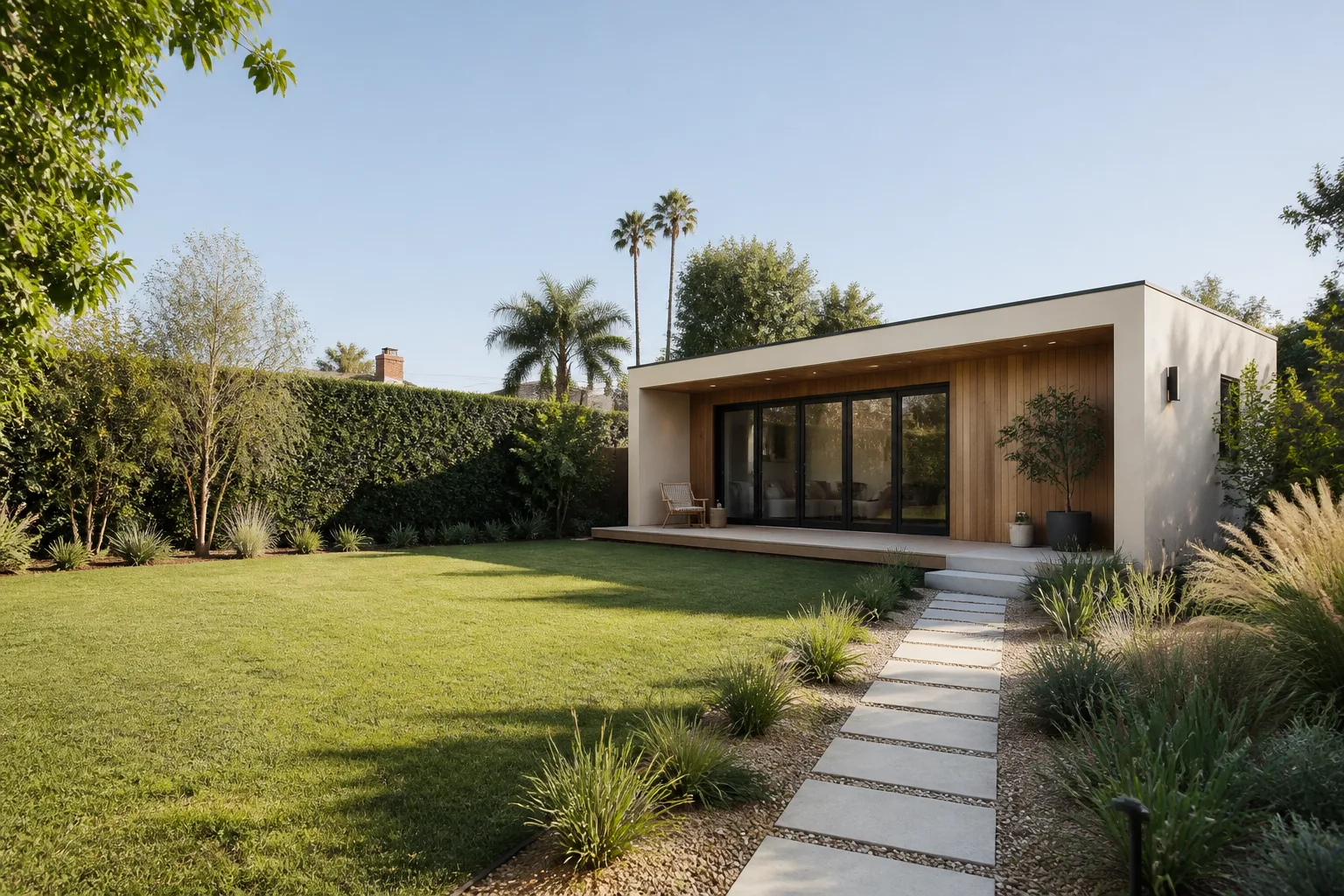
If you’re looking at a Tuff Shed new detached ADU in San Diego, the full turnkey cost typically lands between $85,000 and $180,000 depending on foundation type, utility runs, and finish level. We stock and install Tuff Shed-compatible components for these builds, and we can usually have a crew on your site within two weeks of your written approval. The structure itself is just the starting point: most San Diego homeowners discover that what makes or breaks the project is everything that connects to it, from the concrete pad to the electrical service, and that’s where costs and delays tend to hide.
Most calls we get about Tuff Shed ADUs in San Diego aren’t about the shed failing. They’re about the systems around it: a foundation that settled, a subpanel that wasn’t sized right, a mini-split that can’t keep up with an August heat wave in El Cajon. We’ll walk through what fails first, what it costs to fix, and how to avoid paying for the same mistake twice.
Which Tuff Shed Models This Applies To
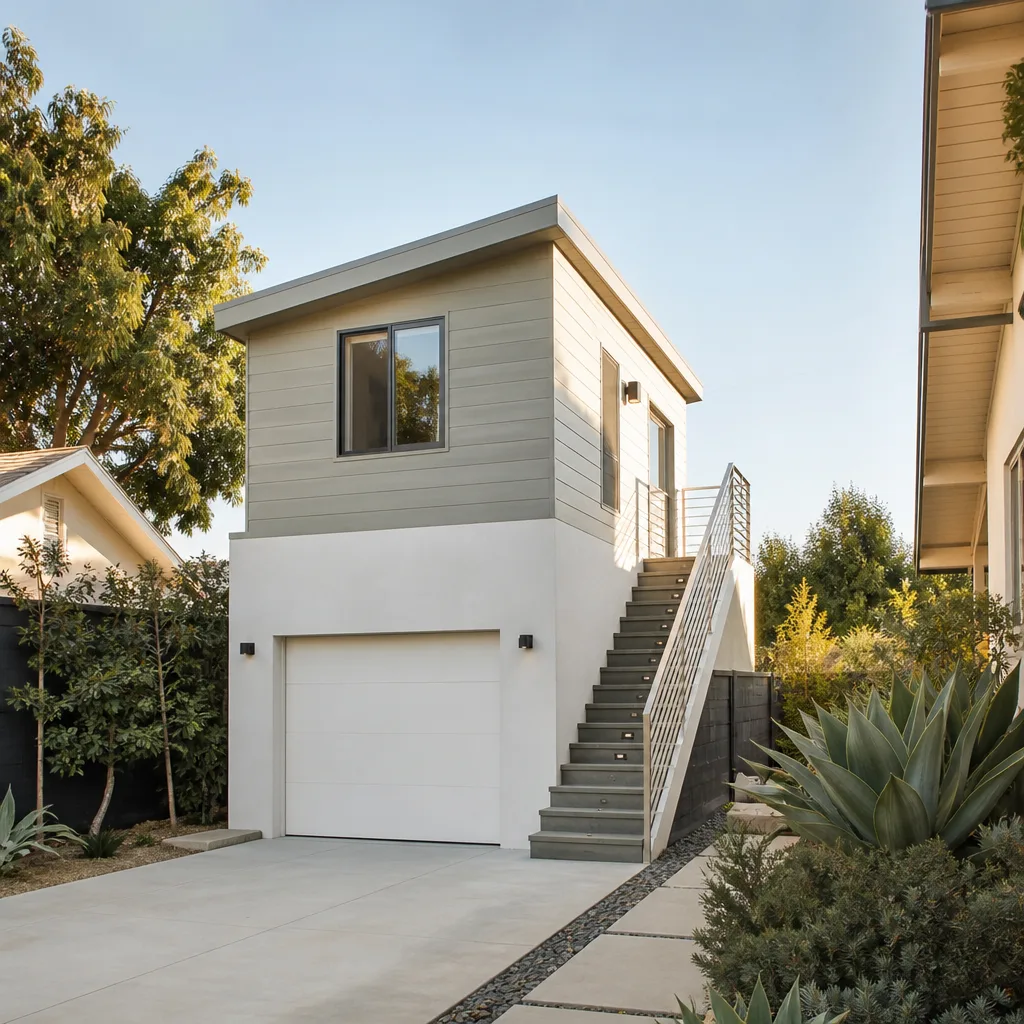
Tuff Shed builds two product lines that commonly get converted into detached ADUs in San Diego: the Premier PRO series (built on-site, heavier framing, designed for more customization) and the Ranch series (factory-built, delivered on a trailer, lighter frame). The Premier PRO line is what we see most often on ADU projects because it’s engineered closer to residential framing standards, which simplifies the San Diego permitting path. The Ranch series can work, but it often needs structural upgrades before the city will sign off on it as a dwelling unit.
Here’s the compatibility gotcha that trips up a lot of San Diego homeowners: a Tuff Shed built as a storage shed is not automatically an ADU. The floor joist spacing, wall stud thickness, and roof load rating on a standard shed don’t meet California residential building code for a living space. If you’re working with an existing Tuff Shed, you need the original build sheet or a framing inspection before anyone can honestly tell you whether it’s ADU-ready. If you’re buying new specifically for an ADU conversion, order it with the residential framing option from day one. It adds roughly $1,500 to $3,000 to the base price and saves thousands in retrofit work later.
For parts and components, we always recommend OEM Tuff Shed materials when they’re structural: wall panels, roof trusses, and the door framing. For mechanical systems like mini-splits, water heaters, and electrical panels, quality aftermarket equipment from brands like Mitsubishi, Rheem, and Square D performs just as well and is easier to service locally in San Diego. Tuff Shed doesn’t manufacture HVAC or electrical gear, so there’s no OEM-vs-aftermarket tradeoff on those components. The real decision is whether you’re working with a contractor who understands the building code around a Tuff Shed shell, because the shell itself is rarely the problem.
Lodgewick ADU San Diego is an independent service provider and installer. We’re not affiliated with Tuff Shed, but we work with their shells regularly and know exactly how the city of San Diego treats them in the plan review process.
Signs Your Tuff Shed New Detached ADU Is Failing
- Floor feels springy or soft near the door. This usually means the concrete pad underneath has settled or wasn’t poured thick enough for the load. In San Diego’s clay-heavy soils, especially in Mission Valley and Santee, pad settlement is the single most common structural issue we fix on Tuff Shed ADUs.
- Doors stick or won’t latch in summer. Tuff Shed framing expands and contracts with temperature swings. If the door frame wasn’t reinforced or the slab wasn’t level, you’ll see this every July and August. It’s rarely the door itself; it’s the frame racking against an uneven pad.
- Mini-split runs constantly but the space won’t cool below 80°F. Shed shells have minimal insulation from the factory. The stock wall insulation is R-11 at best, which is not enough for a San Diego inland summer. We see this in Lakeside and Ramona regularly, where daytime highs outpace what the stock shell was designed to handle.
- Moisture or mildew smell near the base of exterior walls. This points to a flashing or drainage issue where the shed shell meets the foundation. Without proper capillary break and weep screed, water wicks up into the bottom plate. In coastal neighborhoods like Ocean Beach and Pacific Beach, marine moisture accelerates this if the detailing wasn’t right at install.
- Electrical outlets trip the breaker when you run two appliances at once. The stock subpanel in a Tuff Shed conversion is often undersized for actual living use. If your microwave and toaster oven can’t run at the same time, the subpanel or the feeder wire was sized for storage-shed loads, not dwelling-unit loads.
Replacement Cost & What’s Included
In San Diego, here’s what we quote for the most common Tuff Shed ADU fixes as of this year:
- Foundation repair or re-leveling: $4,000 to $12,000 depending on whether we’re lifting and shimming or cutting out and repouring a section of pad.
- Insulation upgrade and weather sealing: $2,500 to $6,000 for a full shell retrofit, including new R-15 wall insulation and air-sealing around the sill plate.
- Subpanel replacement or feeder wire upgrade: $2,800 to $5,500 including permit, new panel, and trenching if the existing conduit is undersized.
- Door re-framing and re-hanging: $800 to $2,200 if the rough opening needs structural correction, not just hinge adjustment.
- Roof sealing and flashing repair: $1,200 to $3,500 depending on roof type and how much of the perimeter needs re-detailing.
Every quote includes the parts, labor, permit fees where required, and a written line-item breakdown before we start. You’ll know what you’re paying for and why. Our work is covered by the 365-Day Done Right Promise: if something we installed fails within a year, we come back and fix it at no charge. That commitment is in writing on every project.
The price range on any given Tuff Shed ADU fix in San Diego comes down to three things: whether the original install was done to residential code in the first place, what your soil and drainage look like, and whether the city needs to inspect before we can close the permit. Homes in Coronado with salt-air exposure and homes in Poway with expansive soil face different failure modes, and the fix costs reflect that.
DIY or Call Us?
Some things on a Tuff Shed ADU are safe to check yourself. You can inspect the exterior flashing, look for gaps where the siding meets the pad, and test whether your outlets trip under load. That’s useful diagnostic information, and we’ll ask you what you found when you call.
What you shouldn’t do is open an electrical panel, attempt to re-level a foundation, or start pulling apart wall framing. The electrical work on a detached ADU in San Diego requires a permit and a licensed electrician, full stop. Getting it wrong isn’t just a failed inspection, it’s a fire hazard. Foundation work without the right equipment and an understanding of load paths will make the problem worse and cost more to undo than it would have cost to fix properly the first time.
If you’ve inherited a Tuff Shed ADU that a previous contractor left half-done, or you suspect the original conversion wasn’t permitted, call us at (619) 376-2760. We’ll send someone out to look, tell you honestly what you’re dealing with, and give you a written price before any work starts.
FAQs
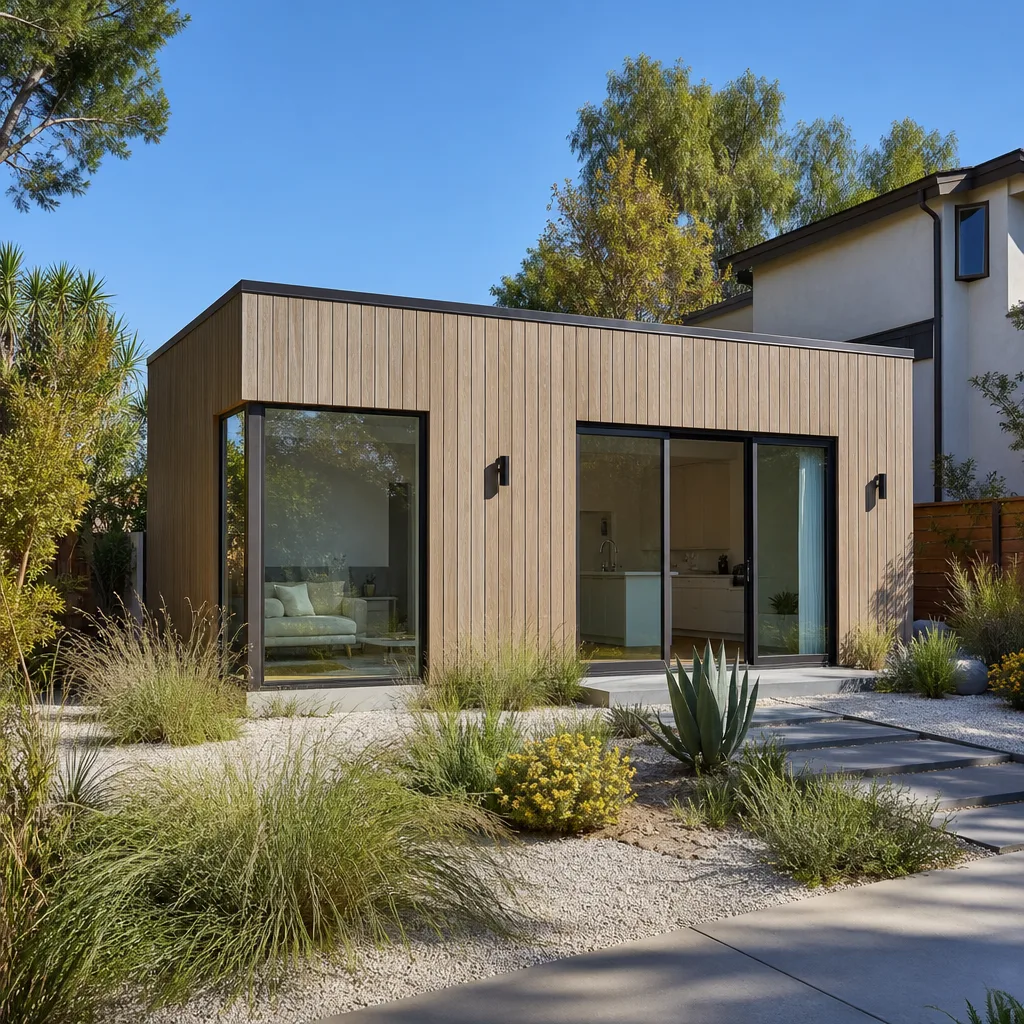
A Tuff Shed shell used as an ADU typically lasts 25 to 40 years in San Diego’s climate if the foundation is sound and the shell was sealed properly at install. The weak points are the bottom plate near the pad and the roof flashing, both of which start showing wear at the 10 to 15 year mark in coastal neighborhoods. Call (619) 376-2760 and we’ll assess what you’re working with. Estimates are free.
Most problems can be repaired, not replaced. Foundation settlement, undersized electrical, failing insulation, and door racking are all fixable without tearing down the shell. The only time replacement makes sense is if the framing itself has rot or termite damage in multiple load-bearing walls. We’ll tell you which situation you’re in before recommending any work.
Most repairs take two to five working days from start to inspection. Electrical panel swaps are usually done in one day plus the city inspection. Foundation re-leveling can run a week if we’re cutting concrete. We give you a defined arrival window and a written timeline before work starts, and we keep the job site clean while we’re there. Call (619) 376-2760 for a precise timeline on your specific issue.
Yes. We carry common Tuff Shed-compatible components on our trucks, including door hardware, flashing material, sealants, subpanel components, and insulation. We also have standing relationships with suppliers of Abodu, Cover, and Dvele components for multi-brand properties. If we need something specific for your build, we’ll have it ordered and on-site before the crew arrives.
Get a Straight Answer and a Written Price
If you own a Tuff Shed ADU in San Diego and something isn’t right, call us at (619) 376-2760. You’ll talk to a live person, not a phone tree. We’ll schedule a time to look at the unit, tell you what’s actually wrong, and put a written price in your hand before you commit to anything. As Russ Delmar puts it: “Tell me what you’re hoping to build, and I’ll tell you what it actually takes, cost, timeline, and all the permit steps, before you spend a dime.”
Written by Russ Delmar, Owner, Lodgewick ADU San Diego at Lodgewick ADU San Diego, serving San Diego and nearby areas.